


Communism in Historical Fiction
3rd International H/Story Seminar
- URL: https://hstory.us.edu.pl/events/iii-international-h-story-seminar/
- Event Date: 2026-04-02 ~ 2026-04-02
- Abstract Submission Date: 2026-02-15
- Organizer: H/Story
3rd International H/Story Seminar
Communism in Historical Fiction
02.04.2026
online
University of Silesia in Katowice
Institute of Literary Studies
H/Story Research Group
Although communism might seem a remnant of the past, this is not the case for many reasons. As an ideology and political system, it persists in countries that openly embrace it, ones that work on their decommunisation, and ones that have its ideological-political representatives (despite never having been essentially communist). As a philosophical system, the socialist thought that derives from Marxism seems to permeate every aspect of our lives. But these are not the only political and ideological reasons that keep making communism a vital element of our cultural imaginary. Literature, cinema, and games continue to offer us representations of communism that tap into either our experiences or ideas of it; further stimulating our appetite for it. Combing through various texts of literature and culture and games evidences this point. For those nostalgic about this era, All That I Love and The Hundred-Year-Old Man who Climbed out the Window and Disappeared offer a rather idealistic take on a period usually associated with struggle and hardship. Those who either endured or are aware of communist brutality might experience it vicariously through historical novels like Paradise of the Blind, The Bonesetter’s Daughter, or Painter of Silence. Reviving communism in literature, cinema, and games is not limited to black and white representations of it. Those who struggled but also managed to make a life for themselves under communism can find their memories echoed in Edge of Eternity, Dreaming in Cuban, Swimming in the Dark, and Heroes of the Evening Mist. For those interested in the cultural life of the era, You, Fascinating You, The Last Man in Europe, and Pearl of China offer nuanced portrayals of the bygone glitterati. The panoply of portrayals of communism also includes works focusing on more ticklish subjects – such as (dis)loyalties under communism (The Sympathizer, The Death of Stalin, Jack Strong) or (ir)religiousness (The Christening, Operation Pope) – and using communism as a fabric with which to weave alternative histories (S.T.A.L.K.E.R., The Man in the High Castle, 1983).
These diverse representations of communism are indicative of perhaps the most popular function that replaying communism has: entertainment (and one may wonder about the effects of rendering communism as entertaining). But, as might be deduced, these works also serve other purposes. Even those who experienced or are experiencing communism first-hand have limited knowledge of it and, by having it replayed via media, may deepen their understanding of its workings. Interestingly, such “education” might be variously motivated – just as it might be a form of propaganda, so it might also be a means by which to keep communism afloat in the cultural imaginary; perhaps, to keep us wary of the threats that it brings with itself. Replaying communism also (re)introduces us to the workings of this doctrine/ideology and explains, for instance, how communism-inspired politics was made and translated into economic decisions and ideological indoctrination.
This seminar is interested in representations of communism in various media, with the primary focus on – understood very broadly – historical fiction. Thus, we invite scholars working in various disciplines and fields of study to participate in the III International H/Story Seminar, Communism in Historical Fiction. Among the specific themes that might be covered are the following (the list is by no means exhaustive):
- memory and nostalgia for communism
- uses and abuses of communism (for example, communism as a narrative means to address contemporary problems or bygone evils and injustices)
- fighting and/or embracing communism
- historicising communism and history through the lenses of communism
- the public and the private communism
- the tragic and the comic interpretations of communism
- sympathies and fears evoked by communism (the Red Scare, the Cold War)
- crimes of communism (tortures, prisons, trials, communism dividing nations and families, traumas, corruption, abuse of power)
- communisms and their values, ideas, and norms
- the rise and fall of communism
- communism versus capitalism
- legitimisation processes of communism (founding myths, fantasies, manipulation, falsifying history, propaganda, stereotypes)
- dismantling communism (narratives exposing the lies of communism and challenging its intellectual basis)
- communist and anti-communist heroes (ideologues, spies, protesters, resistance movement members)
- communism as a form of oppression and colonisation
- communism and its wars (with the bourgeoisie, its own people, and non-communist nations)
- communism as an intellectual revolution, cultural movement, and a substitute for religion
- affects, agency, and everyday life
- attitudes towards the environment and industry under communism
- identity formation under and against communism (love, coming of age, survival, death)
- philosophical, political, social, and psychological takes on communism
- communist history as official history and as alternative history
We are delighted to announce that the seminar’s keynote address will be delivered by Dr Anna Varadi (Cardiff University) and Dr Lucy Jeffery (Cardiff University), the authors and editors of Replaying Communism: Trauma and Nostalgia in European Cultural Production (CEU Press, 2025).
We welcome scholars to submit their proposals by 15 February 2026. Abstracts (of no more than 300 words) accompanied by short biographical notes should be emailed to hstory.seminar@gmail.com. Notifications of acceptance will be sent out on an ongoing basis. The seminar is free of charge and is held online. A post-seminar publication is planned in the form of either a collected volume by a prestigious academic publisher or a special issue of a journal indexed in the Web of Science.
Contact us at: hstory.seminar@gmail.com.
Best regards,
Alicja Bemben and Paulina Hacaś
Event Promotion

|
|
The 13th International Conference on Quantum Dots (QD 2026) |
| 2026-05-17 ~ 2026-05-22 |
|
|
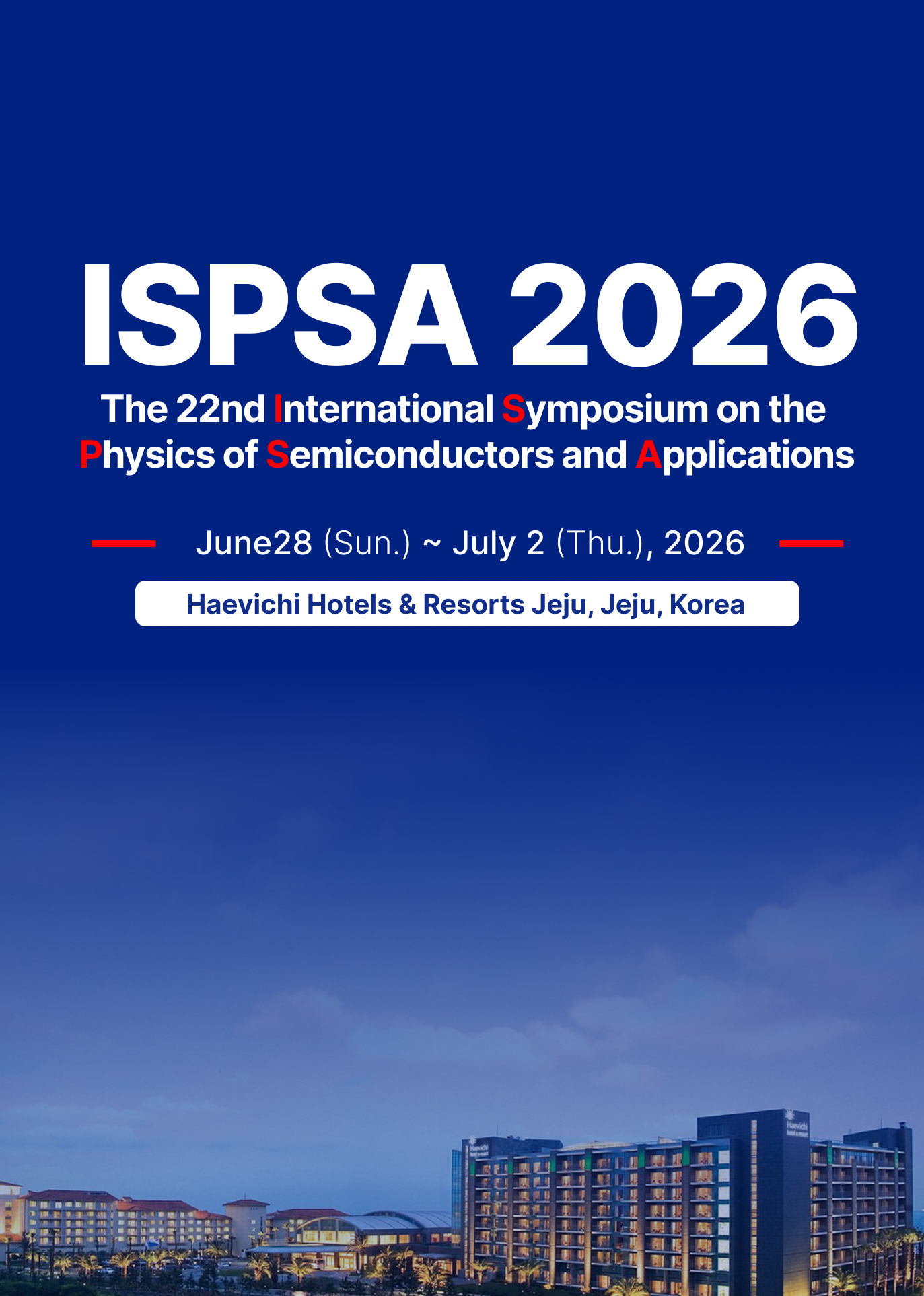
The 22nd International Symposium on the Physics of Semiconductors and Applications (ISPSA 2026) |
| 2026-06-28 ~ 2026-07-02 |

|
|
The 15th Asia-Pacific Conference on Transportation and the Environment (APTE 2026) |
| 2026-07-08 ~ 2026-07-10 |
Journal Promotion

|
| Acta Koreana (Acta Koreana) |
|
| Acta Via Serica (AVS) |

|
| Earthquakes and Structures, An International Journal (Earthquakes and Structures) |
|
| Journal of Information Processing Systems (JIPS) |

|
| Journal of Internet Computing and Services (KSII - JICS) |

|
| Membrane and Water Treatment (MWT) |
|
| Smart Structures and Systems (Smart Structures and Systems) |




MANUSCRIPTLINK © 2015 -
