

Voices: An International Postgraduate Symposium
- URL: https://www.um.edu.mt/arts/english/
- Event Date: 2026-06-05 ~ 2026-06-05
- Abstract Submission Date: 2026-03-07
- Submission Date: 2026-03-07
- Organizer: Department of English, University of Malta
- Location: Valletta, Malta
Feminism & Women's Studies Gender Studies Humanities, Literature & Arts (General) American Literature & Studies Literature & Writing Philosophy Visual Arts English Language & Literature
CALL FOR PAPERS: VOICES
Representation, Recognition, Resistance
Voice is generally thought of as the ability to express thoughts, emotions, and experiences through language. It is not merely a means of communication, but a marker of individuality and agency. In today’s world, there is a sense of urgency to hone one’s voice, to master it, to manipulate it skilfully so as to assert identity and ensure recognition and acceptance. More than ever, it is crucial that our identity be known, primarily to ourselves, so that we can then make our way into the world. What better way to do this than through our voice?
Such an emphasis on voice, however, opens up a host of questions about who and what can have agency and what can indeed be recognised as voice. Is voice necessarily and solely human? Can other voices be heard if we listen closely enough? What might it mean to lend a voice to someone or something, and what might the ethics behind this be? How and why are voices silenced, and how do the hegemonic voices of power speak to us?
While voice denotes the singular, ‘voices’ signals a collective force larger than any one person. It can connote a convergence of individual expressions into a unified frequency that contains difference, be it a social movement, an artistic endeavour, or even a choir. Voices in dialogue create new opportunities for expression and can empower communities through pluralities of understanding. But differences can also be discordant, standing in tension with one another, representing fractures that might remain irreconcilable, always fundamentally at odds.
We are at a point in time where voices can be heard from across the globe, and yet we have never felt so starved for communication. Although voice is commonly understood as a bridge between individuals, it can also be an instrument of isolation and disconnection. Digital platforms enable this proliferation, shaping how expression is produced, circulated, and controlled. As certain voices are amplified and others are marginalised, exploring the theme of voice becomes essential for understanding how power operates in contemporary society.
As AI systems grow more sophisticated in replicating human expression, this exploration becomes even more urgent since the boundary between authentic and synthetic voices is blurred, raising questions about authorship, style, originality, and the preservation of human subjectivity. While AI can enhance communication, its proliferation risks diminishing the value placed on genuine human perspectives and the lived experiences that shape them. Therefore, exploring voice today becomes an essential inquiry into what distinguishes human expression from artificial reproduction, and how society can safeguard the integrity of human creativity in an era where technological imitation is becoming increasingly pervasive.
This urgency is heightened by the fact that, historically, the loudest voices belonged to those with privilege. While the value of the underrepresented voice has been growing steadily since the mid-twentieth century, new forms of censorship and surveillance have intensified the silencing of already marginalised communities. Moreover, there is a persistent tension between speaking authentically and responsibly; to assert a voice without regard for harm is not neutral, and to self-censor for safety may amount to acquiescence.
Attending is an ethical act of rebalancing power, making the unheard audible, and interrogating the structures that determine who and what may speak and who and what must remain silent. This is why when speaking about voice, it is necessary to also attend to its possible inverse: silence. The spaces where voice is absent, forbidden, lost or unrecognised are as powerful as any soliloquy, and the question of how to engage with such absences thus becomes important. Language, literature and art can represent all manner of silences, giving weight to unspoken trauma, registering the deliberate erasure of historical pasts and the systemic silencing of marginalised groups. Attending to such erasure involves an act of witnessing, of ethically listening to a voice even when it might not have the power to make itself heard, exploring its resonances through different uses of language, modes of expression and media.
Hosted by the Department of English at the University of Malta, this Postgraduate Symposium invites us to engage in this urgent exchange: to hone our voices, to attend closely to others, and to critically examine the very fabric of human expression in a world where it is simultaneously amplified, diluted, and surveilled. We invite you to let your own voices be heard, to listen to others, and to critically examine various aspects of human and nonhuman experience as expressed through language, text, film and other forms of expression.
We invite speakers to present a 20-minute paper at our 2026 Postgraduate Symposium. We seek papers that interrogate the literal, metaphorical, and theoretical dimensions of ‘voice’ across language, literature and other forms of artistic expression. We also welcome interdisciplinary submissions that explore the theme in different literary, cultural, philosophical, historical, and digital contexts. Possible avenues include, but are not limited to:
- Literary voices; literature and voice
- Textual approaches that are sensitive to voice, style, tone, the auditory
- Voice and authenticity in the age of AI; transhuman and posthuman voices
- Nonhuman and non-anthropocentric voices; ecocriticism and the Anthropocene
- Voices in children’s literature
- Silence as resistance, trauma, or erasure; censorship and autocensorship
- The ethics of listening and representation
- Collective voice in social movements, historical events, and/or digital spaces
- Linguistic approaches towards voice and speech utterances
- Voices lost/gained in translation, adaptation, remediation
- Geographical voice in the Mediterranean context and beyond
- Marginalised and/or fragmented voices; race, disability, gender, orientation, ethnicity
- Authorial voice vis-à-vis cognitive bias; enduring/non-enduring voices
- Voiceless utterances
- Controversial voices
- Voices in non-textual arts and media
The deadline for submissions is the 7th of March 2026. Submitted abstracts should be no longer than 250 words and should be accompanied by a brief biographical note. Please send abstracts to englishpgsymposium@um.edu.mt.
The symposium will take place in Malta on the 5th and 6th of June, and is open to postgraduate students following courses at M.A., M.Phil., and PhD levels. Accepted speakers will be notified within a fortnight of the submission closing date. This symposium will accommodate both in-person and online speakers – please indicate your preference in the submission email.
This symposium is part of the Erasmus+ project ‘(Re-)Visiting the Mediterranean: Literature, Culture, Environment’, funded under the HE KA220 Cooperation Partnerships in Higher Education.
Funded by the European Union. Views and opinions expressed are however those of the author(s) only and do not necessarily reflect those of the European Union or the European Education and Culture Executive Agency (EACEA). Neither the European Union nor EACEA can be held responsible for them.
Event Promotion
|
|
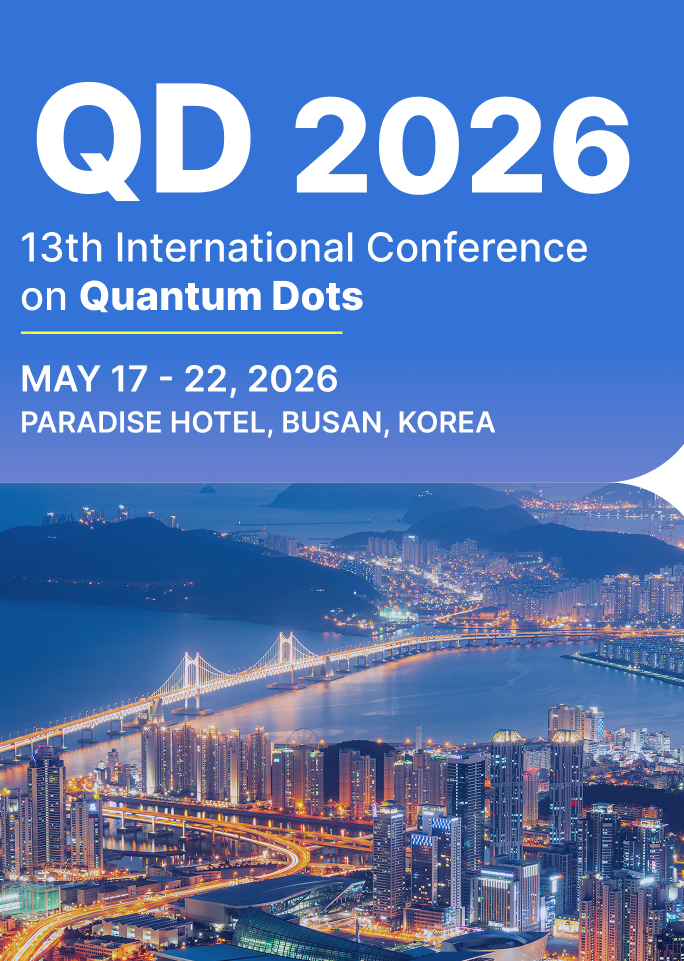
The 13th International Conference on Quantum Dots (QD 2026) |
| 2026-05-17 ~ 2026-05-22 |
|
|
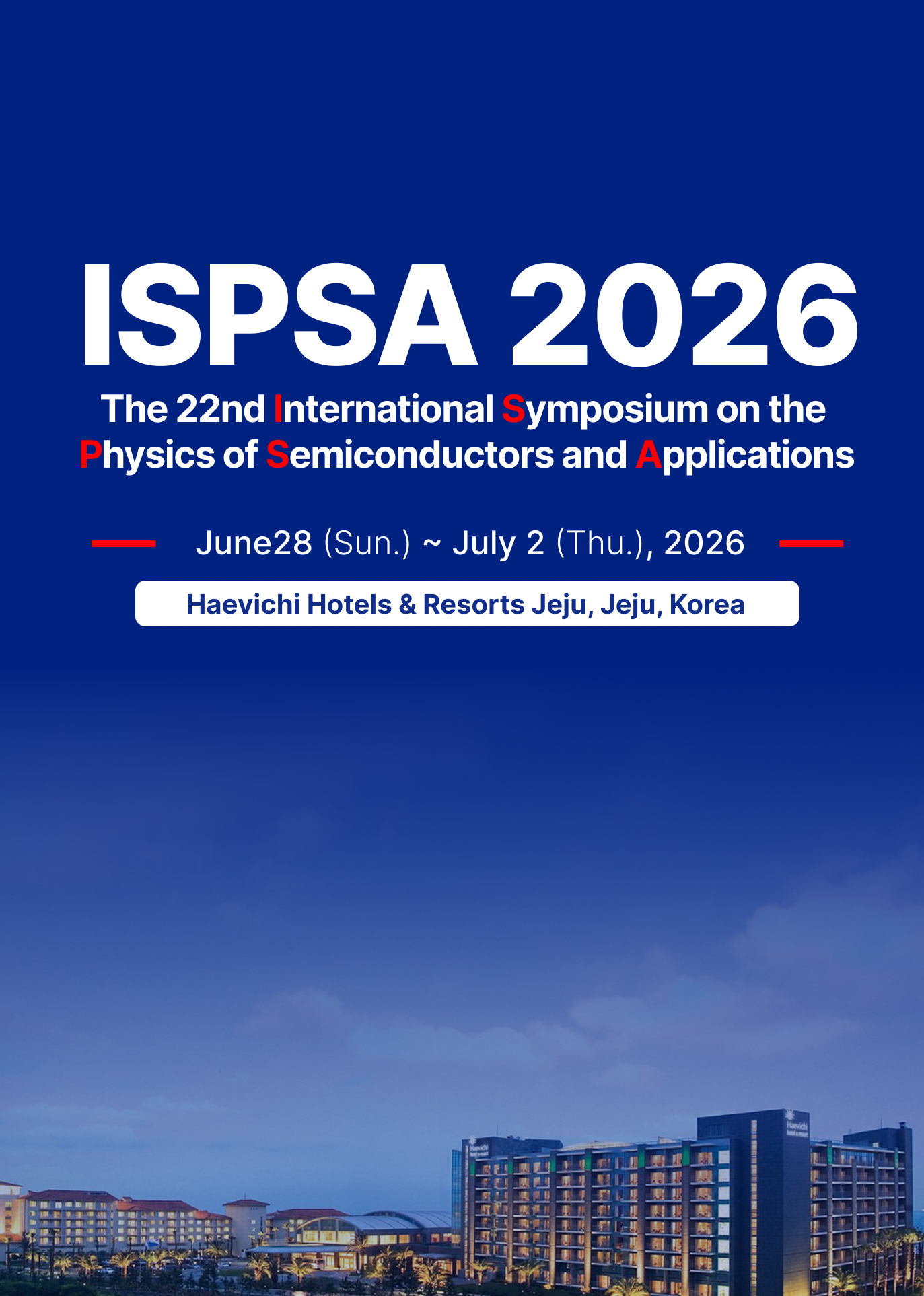
The 22nd International Symposium on the Physics of Semiconductors and Applications (ISPSA 2026) |
| 2026-06-28 ~ 2026-07-02 |

|
|
The 15th Asia-Pacific Conference on Transportation and the Environment (APTE 2026) |
| 2026-07-08 ~ 2026-07-10 |





MANUSCRIPTLINK © 2015 -
