

63rd PRAGUE International Conference on Studies in Languages & Education (PSLE-26) July 27-29, 2026 Prague (Czech Republic)
PSLE-26
- URL: https://drhss.org/conference/471
- Event Date: 2026-07-27 ~ 2026-07-29
- Submission Date: 2026-07-01
- Organizer: DRHSS
- Location: Prague, Czech Republic
Foreign Language Learning Language & Linguistics English Language & Literature
Call for papers/Topics
Full Articles/ Reviews/ Shorts Papers/ Abstracts are welcomed in the following research fields:
1. Applied Linguistics & Language Theory
This area focuses on the scientific study of language and how it is actually used in educational contexts.
Second Language Acquisition (SLA):
The Critical Period Hypothesis (the "ideal" age for learning).
Interlanguage and error analysis.
Input, output, and interaction hypotheses.
Linguistic universal grammar vs. emergentism.
Sociolinguistics in Education:
Language variation and dialects in the classroom.
Code-switching and translanguaging.
Language attitudes and linguistic prejudice.
World Englishes and English as a Lingua Franca (ELF).
Pragmatics & Discourse Analysis:
Classroom discourse (teacher-student interaction).
Politeness and speech acts in a second language.
Critical Discourse Analysis (CDA) in textbooks.
2. Language Pedagogy & Methodology
This focuses on the "how-to" of teaching—the techniques and frameworks used by educators.
Teaching Approaches:
Communicative Language Teaching (CLT).
Task-Based Language Teaching (TBLT).
Content and Language Integrated Learning (CLIL).
The Flipped Classroom and Blended Learning.
Skill-Specific Instruction:
Receptive Skills: Listening and Reading comprehension strategies.
Productive Skills: Speaking (fluency vs. accuracy) and Writing (process vs. product).
Systems: Vocabulary acquisition, Grammar instruction (deductive vs. inductive), and Phonology/Pronunciation.
Language for Specific Purposes (LSP):
English for Academic Purposes (EAP).
Business English and Occupational English.
3. Educational Psychology in Language Learning
Understanding the internal mental and emotional state of the learner.
Individual Differences:
Language learning aptitude and working memory.
Learning styles vs. learning strategies.
Personality factors (extroversion vs. introversion).
Affective Factors:
Language anxiety and the "Affective Filter."
Intrinsic vs. extrinsic motivation.
The "Ideal L2 Self" (Motivational Self System).
Cognitive Processes:
Metacognition (thinking about one's own learning).
Implicit vs. explicit learning.
4. Educational Technology (EdTech) & Digital Learning
The role of modern tools in facilitating language education.
Computer-Assisted Language Learning (CALL):
Mobile-Assisted Language Learning (MALL).
Gamification and educational apps (e.g., Duolingo, Memrise).
Intelligent Tutoring Systems (ITS).
Emerging Technologies:
Artificial Intelligence (AI) in automated feedback and grading.
Virtual Reality (VR) for immersive cultural experiences.
Corpus Linguistics tools for classroom use.
5. Curriculum Development & Assessment
The administrative and structural side of education.
Syllabus Design:
Functional-Notional syllabi.
Grammatical vs. Situational syllabi.
Needs analysis for curriculum design.
Assessment & Testing:
Formative vs. Summative assessment.
Proficiency frameworks (CEFR, ACTFL).
Validity, reliability, and "washback" effect in testing.
High-stakes testing (IELTS, TOEFL, SAT).
6. Policy, Literacy & Multilingualism
The broader social and political implications of language in schools.
Language Policy & Planning:
Medium of Instruction (MoI) debates.
Revitalization of endangered or minority languages.
National language requirements in citizenship.
Literacy Studies:
Early childhood literacy and phonics.
Multiliteracies (digital, visual, and media literacy).
Academic literacy in higher education.
Bilingual & Multilingual Education:
Immersion vs. Submersion programs.
Dual-language programs.
Heritage language maintenance.
Event Promotion

|
|
The 13th International Conference on Quantum Dots (QD 2026) |
| 2026-05-17 ~ 2026-05-22 |
|
|
The 22nd International Symposium on the Physics of Semiconductors and Applications (ISPSA 2026) |
| 2026-06-28 ~ 2026-07-02 |

|
|
The 15th Asia-Pacific Conference on Transportation and the Environment (APTE 2026) |
| 2026-07-08 ~ 2026-07-10 |
Journal Promotion

|
| Acta Koreana (Acta Koreana) |
|
| Acta Via Serica (AVS) |

|
| Earthquakes and Structures, An International Journal (Earthquakes and Structures) |
|
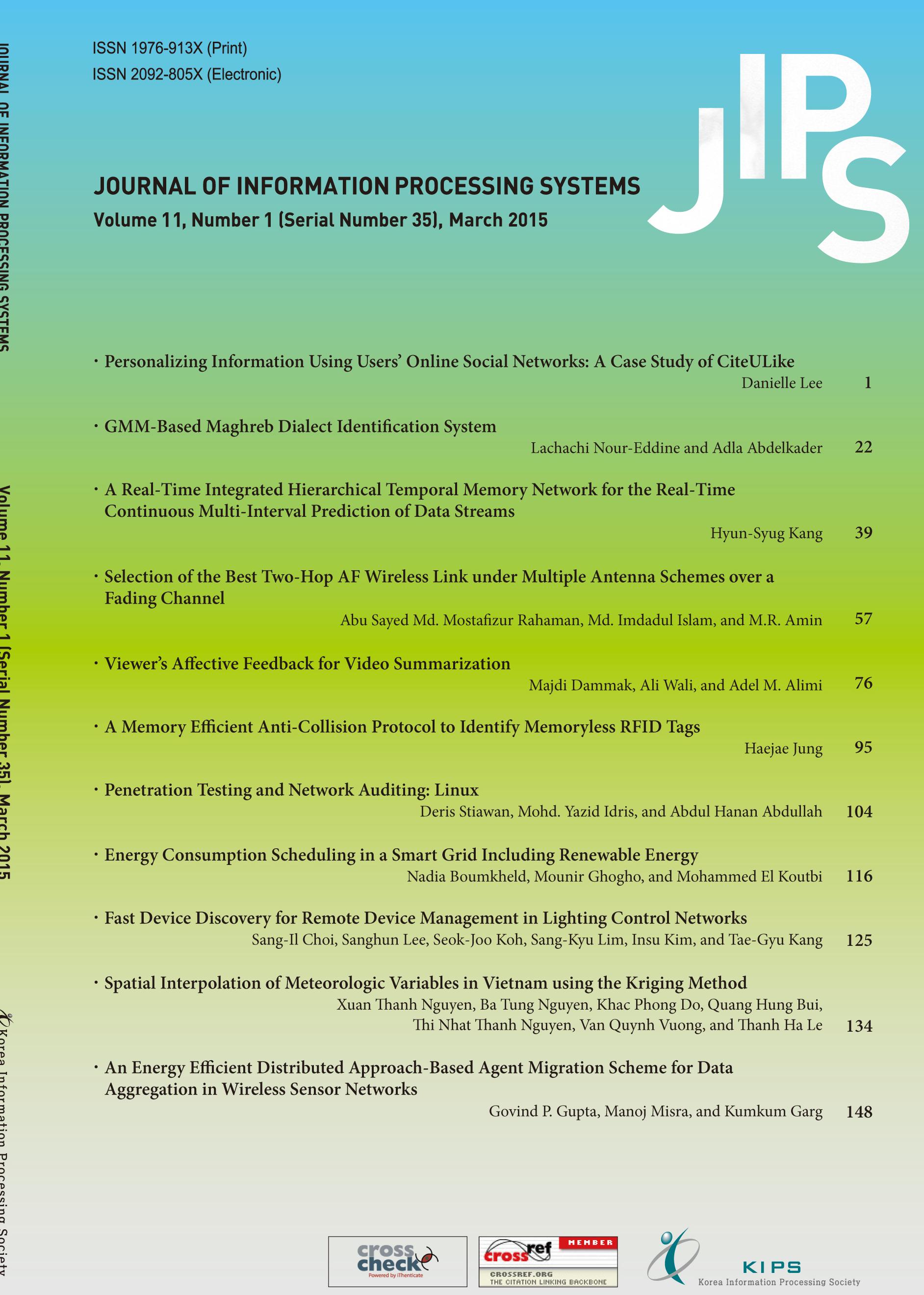
| Journal of Information Processing Systems (JIPS) |
|
| Journal of Internet Computing and Services (KSII - JICS) |
|
| Membrane and Water Treatment (MWT) |
|
| Smart Structures and Systems (Smart Structures and Systems) |



MANUSCRIPTLINK © 2015 -
