


36th AMSTERDAM World Conference on Studies on Education, Teaching & Learning (SETL-26) July 6-8, 2026 Amsterdam (Netherlands)
SETL-26
- URL: https://eaamp.erpub.org/conference/212
- Event Date: 2026-07-06 ~ 2026-07-08
- Submission Date: 2026-07-01
- Organizer: EAAMP
- Location: Amsterdam, Netherlands
Educational Technology Physical Education & Sports Medicine Education Educational Psychology & Counseling
Call for papers/Topics
Topics of Interest for Submission include, but are Not Limited to:
1. Foundations of Education
This area explores the history, philosophy, and societal impact of educational systems.
Educational Philosophy: Perennialism, Essentialism, Progressivism, and Social Reconstructionism.
History of Education: The evolution of schooling from ancient civilizations to modern public systems.
Sociology of Education: Social stratification, equality of opportunity, and the role of schools in communities.
Ethics in Education: Student privacy, professional boundaries, and equity.
2. Learning Sciences & Psychology
Understanding how the human brain processes, stores, and retrieves information.
Learning Theories:
Behaviorism: Operant conditioning and reinforcement.
Cognitivism: Schema theory and information processing.
Constructivism: Social learning (Vygotsky) and cognitive development (Piaget).
Connectivism: Learning in the digital age.
Human Development: Cognitive, emotional, and social milestones (Early Childhood through Adult Adulthood).
Motivation & Engagement: Intrinsic vs. extrinsic motivation, Self-Determination Theory, and Growth Mindset.
Neuroeducation: How brain health, sleep, and stress affect learning outcomes.
3. Instructional Design & Pedagogy
The practical "art and science" of teaching and creating effective curricula.
Curriculum Development: Standardized vs. hidden curriculum, spiral curriculum, and backward design (UbD).
Teaching Methodologies:
Direct Instruction: Lectures and explicit teaching.
Inquiry-Based Learning: Problem-based learning (PBL) and Socratic questioning.
Differentiated Instruction: Tailoring content for diverse readiness levels.
The Flipped Classroom: Moving lectures online to save class time for active practice.
Assessment & Evaluation:
Formative: Check-ins during the learning process.
Summative: Final exams and projects.
Authentic Assessment: Real-world portfolios and performances.
4. Educational Technology (EdTech)
The integration of digital tools to enhance the learning experience.
Learning Management Systems (LMS): Platforms like Canvas, Moodle, and Google Classroom.
Adaptive Learning: AI-driven software that adjusts difficulty based on student performance.
Gamification: Using game design elements (badges, leaderboards) to increase engagement.
Blended & Online Learning: Synchronous vs. asynchronous environments and MOOCs (Massive Open Online Courses).
Assistive Technology: Tools for students with disabilities (speech-to-text, screen readers).
5. Leadership, Policy & Special Education
The administrative and inclusive side of the educational ecosystem.
Educational Leadership: School administration, organizational culture, and teacher mentorship.
Special Education (SPED): Individualized Education Programs (IEPs), 504 plans, and neurodiversity.
Language Acquisition: ESL (English as a Second Language) and Bilingual Education.
Policy & Reform: Standardized testing debates, school choice, and funding models.
Social-Emotional Learning (SEL): Teaching empathy, self-regulation, and interpersonal skills.
Event Promotion

|
|
The 13th International Conference on Quantum Dots (QD 2026) |
| 2026-05-17 ~ 2026-05-22 |
|
|
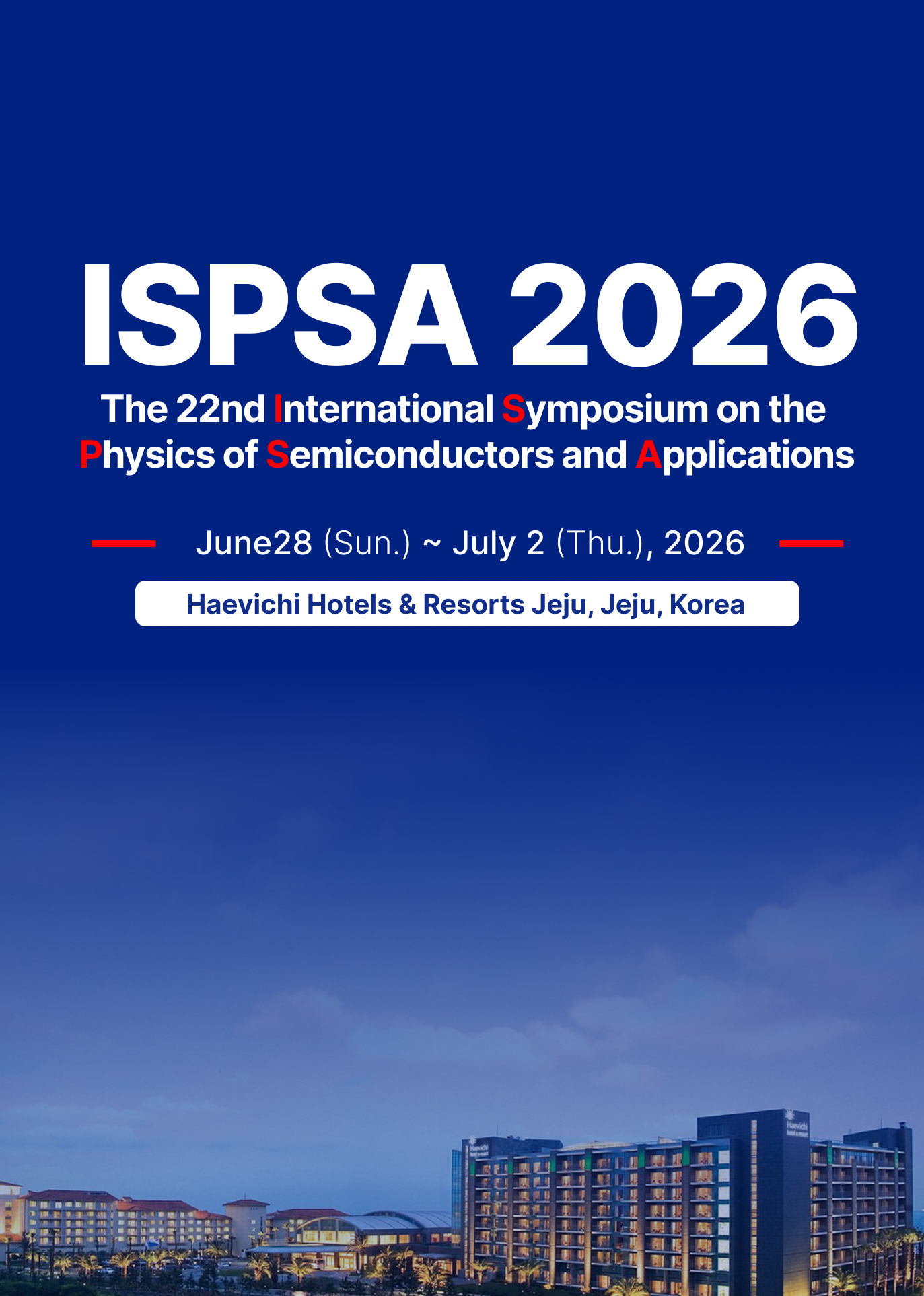
The 22nd International Symposium on the Physics of Semiconductors and Applications (ISPSA 2026) |
| 2026-06-28 ~ 2026-07-02 |

|
|
The 15th Asia-Pacific Conference on Transportation and the Environment (APTE 2026) |
| 2026-07-08 ~ 2026-07-10 |
|
|
ACEM26 / Structures26 (ACEM26) |
| 2026-08-24 ~ 2026-08-25 |
Journal Promotion

|
| Acta Koreana (Acta Koreana) |
|
| Acta Via Serica (AVS) |
|
| Computers and Concrete (Computers and Concrete) |

|
| Earthquakes and Structures, An International Journal (Earthquakes and Structures) |
|
| Geomechanics and Engineering (Geomechanics and Engineering) |
|
| Journal of Information Processing Systems (JIPS) |

|
| Journal of Internet Computing and Services (KSII - JICS) |

|
| Membrane and Water Treatment (MWT) |

|
| Smart Structures and Systems (Smart Structures and Systems) |
|
| Steel and Composite Structures, An International Journal (Steel and Composite Structures) |
|
| Structural Engineering and Mechanics, An International Journal (Structural Engineering and Mechanics) |
|
| Wind and Structures, An International Journal (Wind and Structures) |


MANUSCRIPTLINK © 2015 -
