

26th LISBON World Congress on Advances in Materials and Industrial Engineering (WAMIE-26) May 13-15, 2026 Lisbon (Portugal)
WAMIE-26
- URL: https://eaceee.erpub.org/conference/197
- Event Date: 2026-05-13 ~ 2026-05-15
- Submission Date: 2026-05-01
- Organizer: EACEEE
- Location: Lisbon, Portugal
Materials Engineering Chemical & Material Sciences (General) Composite Materials
Call for papers/Topics
Topics of Interest for Submission include, but are Not Limited to:
1. Materials Science and Engineering (MSE)
This field focuses on the relationship between the structure of materials at atomic scales and their macroscopic properties.
Fundamentals & Structure
Crystallography: Crystal systems, Miller indices, and lattice defects.
Thermodynamics of Materials: Phase equilibria, Gibbs free energy, and phase diagrams.
Kinetics: Diffusion mechanisms, nucleation, and growth.
Atomic Bonding: Ionic, covalent, metallic, and Van der Waals forces.
Material Classes
Metals and Alloys: Ferrous (steels, cast irons) and non-ferrous (aluminum, titanium, superalloys).
Ceramics and Glass: Structural ceramics, refractories, and electronic ceramics.
Polymers: Thermoplastics, thermosets, elastomers, and polymerization techniques.
Composites: Fiber-reinforced polymers (FRP), metal-matrix, and ceramic-matrix composites.
Semiconductors: Doping, P-N junctions, and photovoltaic materials.
Properties and Characterization
Mechanical Properties: Stress-strain behavior, hardness, fatigue, creep, and fracture mechanics.
Electrical & Magnetic: Conductivity, dielectric properties, ferromagnetism, and superconductivity.
Characterization Techniques: Scanning Electron Microscopy (SEM), X-ray Diffraction (XRD), and Spectroscopy.
2. Manufacturing and Processing
This is the bridge where Material Science meets Industrial application.
Casting and Molding: Sand casting, investment casting, and injection molding.
Forming and Shaping: Forging, rolling, extrusion, and sheet metal working.
Machining: CNC milling, turning, and non-traditional machining (EDM, Laser cutting).
Joining Technologies: Welding, brazing, soldering, and adhesive bonding.
Additive Manufacturing: 3D printing (SLA, FDM, SLS) and powder metallurgy.
3. Industrial Engineering (IE)
This field focuses on the optimization of complex processes, systems, and organizations.
Operations Research & Optimization
Linear & Integer Programming: Mathematical modeling for resource allocation.
Stochastic Processes: Queuing theory and Markov chains.
Simulation: Discrete-event simulation (DES) and Monte Carlo methods.
Supply Chain & Logistics
Inventory Management: EOQ models, JIT (Just-in-Time), and safety stock.
Facilities Layout: Plant design, material handling systems, and warehouse management.
Transportation Modeling: Routing, distribution, and global supply chain strategy.
Quality and Reliability
Six Sigma & Lean Manufacturing: Waste reduction (Muda) and DMAIC methodology.
Statistical Quality Control (SQC): Control charts and capability analysis.
Reliability Engineering: Failure Mode and Effects Analysis (FMEA) and Mean Time Between Failures (MTBF).
Human Factors and Ergonomics
Cognitive Ergonomics: Human-computer interaction and mental workload.
Physical Ergonomics: Biomechanics, workplace design, and safety engineering.
Work Design: Time and motion studies and labor standards.
4. Management and Emerging Trends
Topics that apply to both fields in a modern industrial context.
Engineering Economics: Capital budgeting, NPV/IRR analysis, and life-cycle costing.
Project Management: PERT/CPM charts and Agile methodologies.
Industry 4.0: Digital twins, Industrial Internet of Things (IIoT), and Smart Factories.
Sustainability: Life Cycle Assessment (LCA), circular economy, and green manufacturing.
Event Promotion

|
|
The 13th International Conference on Quantum Dots (QD 2026) |
| 2026-05-17 ~ 2026-05-22 |
|
|
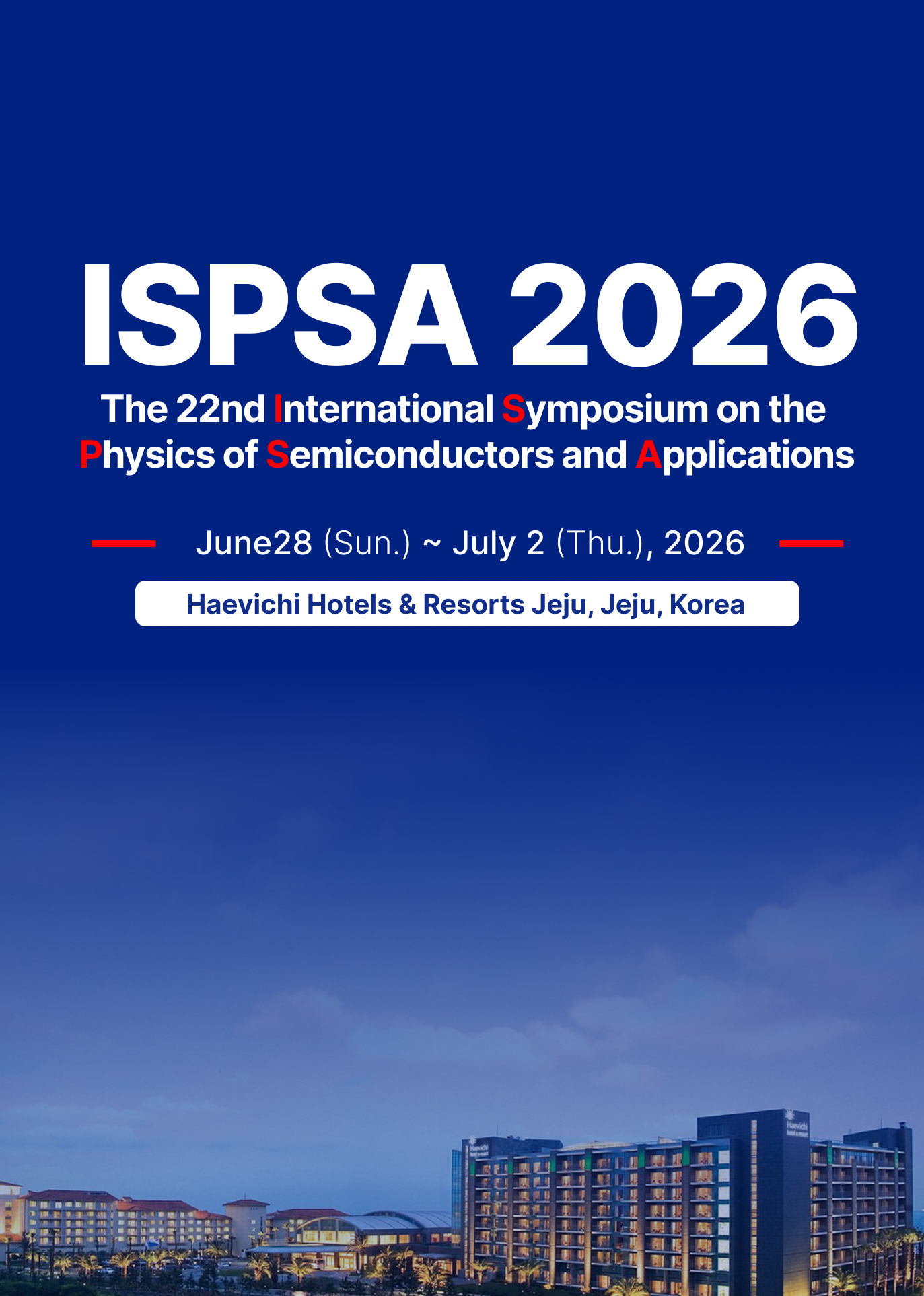
The 22nd International Symposium on the Physics of Semiconductors and Applications (ISPSA 2026) |
| 2026-06-28 ~ 2026-07-02 |

|
|
The 15th Asia-Pacific Conference on Transportation and the Environment (APTE 2026) |
| 2026-07-08 ~ 2026-07-10 |
Journal Promotion

|
| Acta Koreana (Acta Koreana) |
|
| Acta Via Serica (AVS) |
|
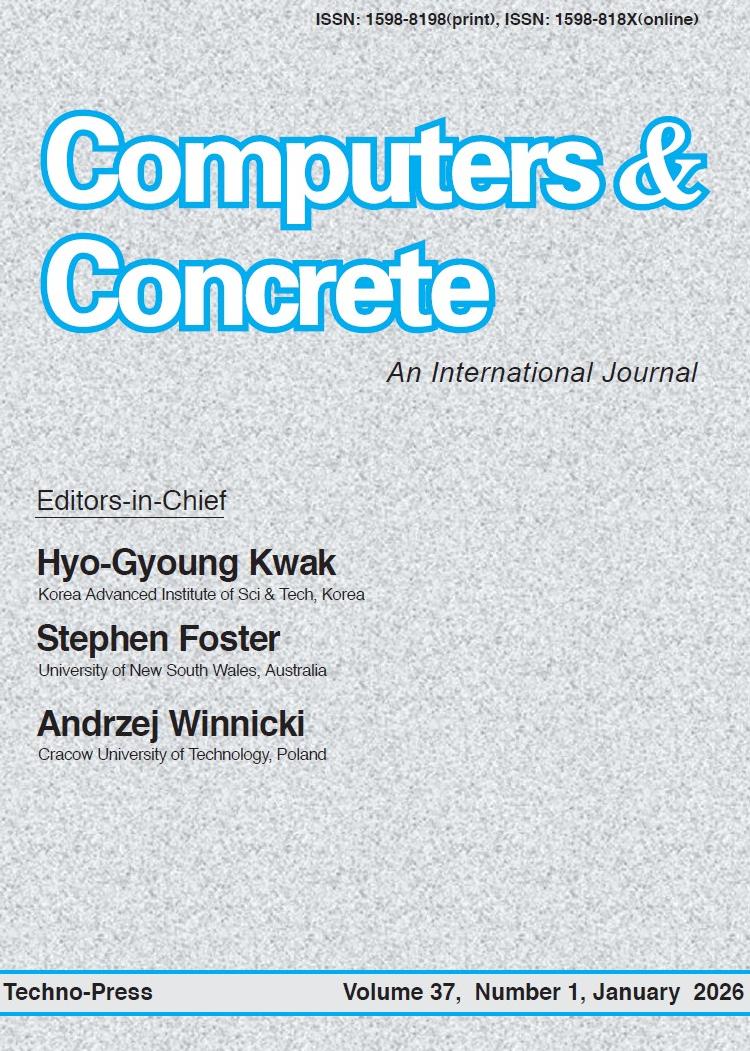
| Computers and Concrete (Computers and Concrete) |
|
| Earthquakes and Structures, An International Journal (Earthquakes and Structures) |
|
| Geomechanics and Engineering (Geomechanics and Engineering) |
|
| Journal of Information Processing Systems (JIPS) |

|
| Journal of Internet Computing and Services (KSII - JICS) |

|
| Membrane and Water Treatment (MWT) |
|
| Smart Structures and Systems (Smart Structures and Systems) |
|
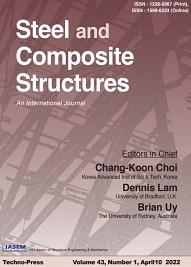
| Steel and Composite Structures, An International Journal (Steel and Composite Structures) |
|
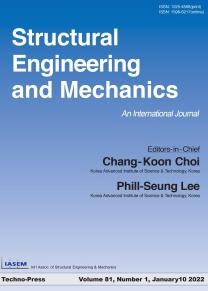
| Structural Engineering and Mechanics, An International Journal (Structural Engineering and Mechanics) |

|
| Wind and Structures, An International Journal (Wind and Structures) |




MANUSCRIPTLINK © 2015 -
