

54th LISBON International Conference on Agriculture, Biological & Environmental Sciences (LABES-26) Oct. 8-10, 2026 Lisbon (Portugal)
LABES-26
- URL: https://ffabs.org/conference/352
- Event Date: 2026-10-08 ~ 2026-10-10
- Submission Date: 2026-09-17
- Organizer: FFABS
- Location: Lisbon, Portugal
Bioinformatics & Computational Biology Molecular Biology Cell Biology Biodiversity & Conservation Biology Bioinformatics & Computational Biology
Call for papers/Topics
Topics of interest for submission include any topics related to:
1. Agricultural Sciences
Focuses on the sustainable production of food, fiber, and fuel.
Crop Science & Agronomy
Cereal, legume, and forage production.
Weed science and integrated pest management (IPM).
Post-harvest technology and storage.
Horticulture
Pomology (fruit) and Olericulture (vegetables).
Floriculture and landscape design.
Greenhouse management and controlled-environment agriculture (CEA).
Animal Science
Livestock nutrition and metabolic physiology.
Animal genetics and selective breeding.
Dairy and poultry science.
Agricultural Economics & Sociology
Agribusiness management and global supply chains.
Food security policy and rural development.
Precision agriculture and AgTech adoption.
2. Biological Sciences
The study of life from the molecular level to entire organisms.
Molecular & Cellular Biology
Genomics, proteomics, and transcriptomics.
Cell signaling and metabolic pathways.
Synthetic biology and CRISPR gene editing.
Microbiology
Bacteriology, virology, and mycology.
Microbial ecology (the microbiome).
Industrial fermentation and bioprocessing.
Organismal Biology
Plant physiology and developmental biology.
Ethology (animal behavior).
Comparative anatomy and evolutionary biology.
Biotechnology
Bioinformatics and computational biology.
Pharmaceutical biology and vaccine development.
Bio-based materials and biofuels.
3. Environmental Sciences
The study of physical, chemical, and biological components of the environment.
Ecology & Conservation
Population and community dynamics.
Restoration ecology and rewilding.
Biodiversity loss and endangered species management.
Earth & Atmospheric Sciences
Climate change modeling and mitigation.
Hydrology and watershed management.
Meteorology and air quality analysis.
Environmental Chemistry & Toxicology
Soil chemistry and nutrient cycling (Nitrogen/Phosphorus).
Ecotoxicology (impact of pollutants on wildlife).
Waste management and bioremediation.
Natural Resource Management
Forestry and silviculture.
Fisheries and marine resource management.
Sustainable land-use planning.
Interrelated (Nexus) Topics
These topics sit at the intersection of all three fields and are currently the focus of global research:
Sustainable Food Systems: Balancing agricultural yield (Ag) with biodiversity preservation (Bio) and carbon sequestration (Env).
Soil Science (Pedology): Studying the soil as a living system (Bio), a medium for crops (Ag), and a filter for pollutants (Env).
One Health: The interdisciplinary approach linking human health to animal health (Bio/Ag) and the shared environment (Env).
Agroecology: Applying ecological principles (Env/Bio) to the design and management of sustainable agricultural systems.
Biogeochemical Cycling: Understanding how elements like Carbon move through plants (Bio), fertilizers (Ag), and the atmosphere (Env).
Event Promotion
|
|
The 13th International Conference on Quantum Dots (QD 2026) |
| 2026-05-17 ~ 2026-05-22 |
|
|
The 22nd International Symposium on the Physics of Semiconductors and Applications (ISPSA 2026) |
| 2026-06-28 ~ 2026-07-02 |

|
|
The 15th Asia-Pacific Conference on Transportation and the Environment (APTE 2026) |
| 2026-07-08 ~ 2026-07-10 |
|
|
ACEM26 / Structures26 (ACEM26) |
| 2026-08-24 ~ 2026-08-25 |
Journal Promotion
|
| Acta Koreana (Acta Koreana) |
|
| Acta Via Serica (AVS) |
|
| Advances in Concrete Construction (Advances in Concrete Construction ) |

|
| Advances in Nano Research (Advances in Nano Research) |

|
| Computers and Concrete (Computers and Concrete) |
|
| Earthquakes and Structures, An International Journal (Earthquakes and Structures) |
|
| Geomechanics and Engineering (Geomechanics and Engineering) |
|
| Journal of Information Processing Systems (JIPS) |

|
| Journal of Internet Computing and Services (KSII - JICS) |
|
| Membrane and Water Treatment (MWT) |
|
| Smart Structures and Systems (Smart Structures and Systems) |
|
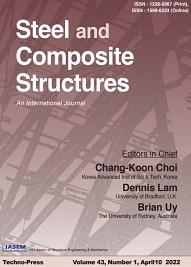
| Steel and Composite Structures, An International Journal (Steel and Composite Structures) |
|
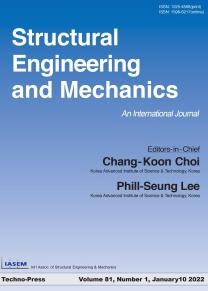
| Structural Engineering and Mechanics, An International Journal (Structural Engineering and Mechanics) |
|
| Wind and Structures, An International Journal (Wind and Structures) |




MANUSCRIPTLINK © 2015 -
