


41st PARIS World Congress on Advances in AI, Electrical & Electronics Engineering (AIEES-26) scheduled on July 20-22, 2026 Paris (France)
AIEES-26
- URL: https://ureng.urst.org/conference/178
- Event Date: 2026-07-20 ~ 2026-07-22
- Submission Date: 2026-07-01
- Organizer: UREBE
- Location: Paris, France
Electrochemistry Microelectronics & Electronic Packaging
Call for Papers: AIEES-26
All Abstracts, Reviews, short articles, Full articles, Posters are welcomed related with any of the following research fields:
1. Artificial Intelligence
These topics focus on the computational and algorithmic side of the field.
Machine Learning (ML) Foundations: Supervised, unsupervised, and reinforcement learning.
Deep Learning: Neural network architectures (CNNs, RNNs, Transformers).
Natural Language Processing (NLP): Sentiment analysis, LLMs, and translation.
Computer Vision: Image segmentation, object detection, and facial recognition.
AI Ethics & Governance: Bias mitigation, explainability (XAI), and safety protocols.
2. Electrical & Electronics Engineering
These represent the core physical and mathematical foundations of EEE.
Circuit Theory & Analysis: KCL/KVL, AC/DC analysis, and network theorems.
Semiconductor Devices: Diodes, MOSFETs, BJTs, and FinFETs.
Power Systems: Generation, transmission, distribution, and smart grids.
Control Systems: Linear system theory, PID controllers, and feedback loops.
Digital Electronics: Logic gates, FPGA design, and Microprocessors/Microcontrollers.
Electromagnetics: Maxwell’s equations, wave propagation, and antenna design.
3. The Intersection
This is where AI algorithms meet physical hardware and electrical energy.
A. Intelligent Power & Energy Systems
Smart Grid Optimization: Using AI to predict load demand and manage distributed energy resources.
Predictive Maintenance: Using ML to analyze vibration and thermal data to predict transformer or motor failure.
Renewable Energy Forecasting: Neural networks used to predict solar irradiance and wind speeds.
B. Embedded AI & Hardware Acceleration
TinyML: Deploying ultra-low-power ML models on microcontrollers.
AI Hardware Accelerators: Designing specialized chips (TPUs, NPUs) and CMOS circuits optimized for tensor operations.
Neuromorphic Engineering: Designing circuits that mimic the biological structure of the human brain.
C. Robotics & Advanced Control
Autonomous Systems: Merging sensor fusion (Lidar/Radar) with AI for self-driving vehicles and drones.
Intelligent Control: Replacing traditional PID controllers with Reinforcement Learning (RL) for complex nonlinear systems.
Industrial Automation (Industry 4.0): AI-driven PLC (Programmable Logic Controller) systems.
D. Signal Processing & Communication
AI-Driven DSP: Using deep learning for noise reduction, echo cancellation, and signal reconstruction.
6G & Cognitive Radio: AI algorithms managing frequency spectrum allocation and beamforming in wireless networks.
Event Promotion

|
|
The 13th International Conference on Quantum Dots (QD 2026) |
| 2026-05-17 ~ 2026-05-22 |
|
|
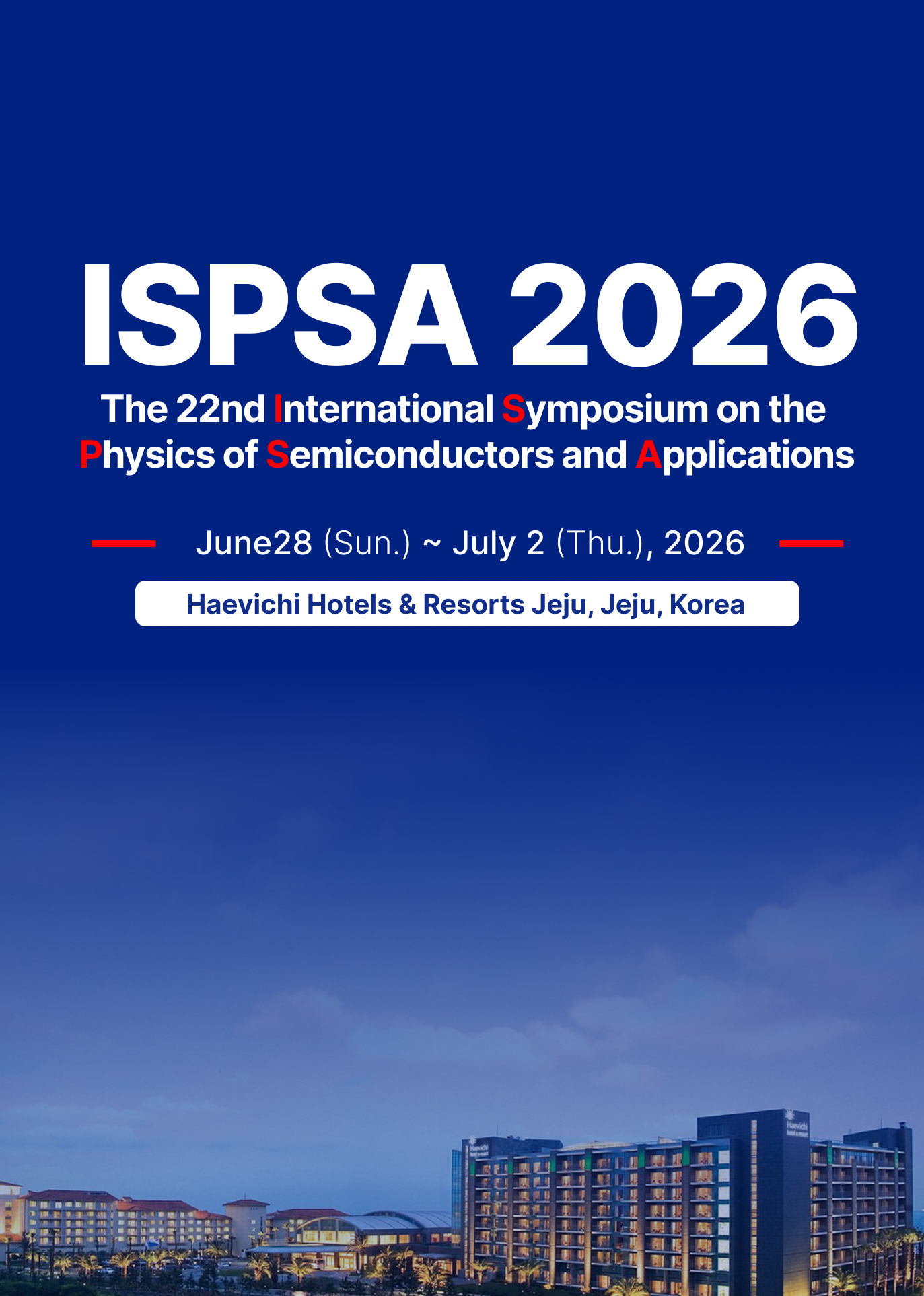
The 22nd International Symposium on the Physics of Semiconductors and Applications (ISPSA 2026) |
| 2026-06-28 ~ 2026-07-02 |

|
|
The 15th Asia-Pacific Conference on Transportation and the Environment (APTE 2026) |
| 2026-07-08 ~ 2026-07-10 |







MANUSCRIPTLINK © 2015 -
