


49th PARIS International Congress on Agriculture and Soil Sciences Research (ASSR-26) July 20-22, 2026 Paris (France)
ASSR-26
- URL: https://caeer.org/conference/392
- Event Date: 2026-07-20 ~ 2026-07-22
- Submission Date: 2026-07-01
- Organizer: CAEER
- Location: Paris, France
Biochemistry Biomedical Technology
Topics
All Abstracts, Reviews, short articles, Full articles, Posters are welcomed related with any of the following research fields:
1. Soil Physical and Chemical Properties
This area focuses on the fundamental "makeup" of the soil, which dictates its ability to support life.
Soil Mineralogy: Crystal structure of clays, primary and secondary minerals.
Soil Physics:
Texture and structure (pore space and bulk density).
Hydrology: Water retention, hydraulic conductivity, and infiltration.
Aeration and thermal properties.
Soil Chemistry:
Cation Exchange Capacity (CEC) and pH regulation.
Redox potential ($E_h$) in submerged soils (wetlands).
Soil organic matter (SOM) fractions and humification.
2. Soil Fertility and Plant Nutrition
This subfield is directly interrelated with crop production, focusing on the nutrient cycle.
Macronutrients and Micronutrients: Nitrogen phosphorus, and potassium (NPK) cycles; trace element bioavailability.
Fertilizer Technology: Slow-release fertilizers, foliar applications, and bio-fertilizers.
Rhizosphere Dynamics: The chemical interactions between root exudates and soil particles.
Nutrient Use Efficiency (NUE): Genetic and management strategies to reduce nutrient waste.
3. Soil Biology and Microbiology
A rapidly growing field focused on the "living" part of the soil.
The Soil Microbiome: Diversity of bacteria, fungi (Mycorrhizae), and archaea.
Soil Fauna: The role of earthworms, nematodes, and micro-arthropods in nutrient cycling.
Biological Nitrogen Fixation (BNF): Symbiotic relationships (e.g., Rhizobium in legumes).
Soil Health Indicators: Enzyme activities and microbial biomass carbon.
4. Pedology and Soil Classification
This independent branch deals with the origin and mapping of soils.
Pedogenesis: Soil-forming factors (climatology, topography, parent material, time, and organisms).
Soil Taxonomy: Classification systems (USDA Soil Taxonomy, World Reference Base).
Digital Soil Mapping: Using GIS and remote sensing to predict soil properties across landscapes.
5. Agronomy and Crop Science
The "Agriculture" side of the research, heavily dependent on soil data.
Crop Physiology: Photosynthesis efficiency and stress tolerance (drought, salinity, heat).
Cropping Systems: Monoculture vs. polyculture, crop rotation, and intercropping.
Precision Agriculture: Use of GPS, IoT sensors, and variable rate technology (VRT).
Weed and Pest Management: Integrated Pest Management (IPM) and herbicide resistance.
6. Sustainable Land Management and Ecology
Interrelated topics that address environmental impact and long-term viability.
Soil Conservation: Erosion control (wind and water), terracing, and cover cropping.
Carbon Sequestration: Soil’s role as a carbon sink to mitigate climate change.
Regenerative Agriculture: No-till farming and holistic grazing practices.
Agroforestry: Integrating trees into agricultural landscapes for biodiversity.
7. Environmental Soil Science (Contamination & Remediation)
Focuses on the impact of human activity on soil quality.
Soil Pollution: Heavy metals, microplastics, and pesticide residues.
Bioremediation and Phytoremediation: Using microbes or plants to decontaminate soil.
Waste Management: Application of sewage sludge, compost, and biochar to land.
Event Promotion

|
|
The 13th International Conference on Quantum Dots (QD 2026) |
| 2026-05-17 ~ 2026-05-22 |
|
|
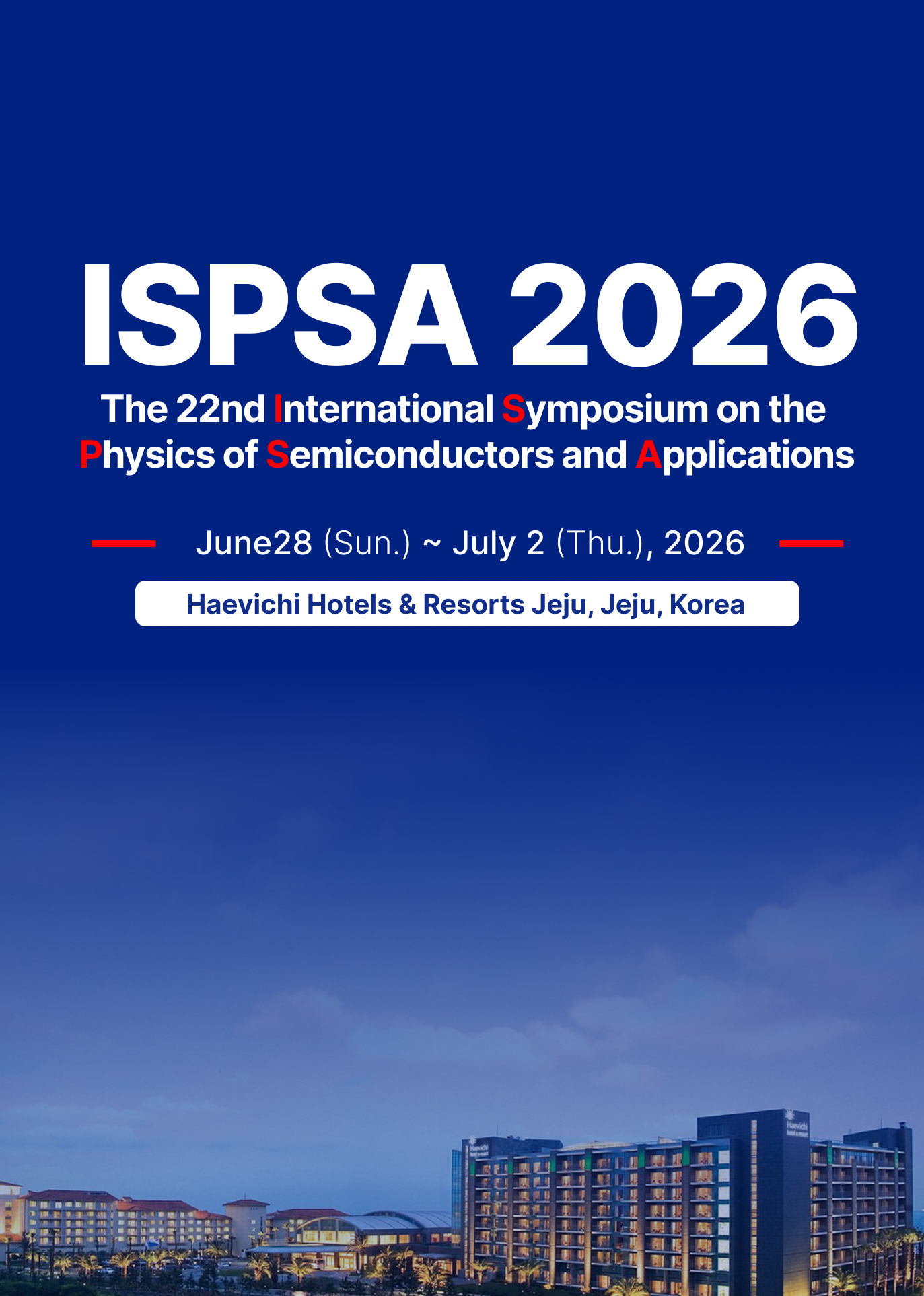
The 22nd International Symposium on the Physics of Semiconductors and Applications (ISPSA 2026) |
| 2026-06-28 ~ 2026-07-02 |

|
|
The 15th Asia-Pacific Conference on Transportation and the Environment (APTE 2026) |
| 2026-07-08 ~ 2026-07-10 |
|
|
ACEM26 / Structures26 (ACEM26) |
| 2026-08-24 ~ 2026-08-25 |
Journal Promotion

|
| Acta Koreana (Acta Koreana) |
|
| Acta Via Serica (AVS) |

|
| Computers and Concrete (Computers and Concrete) |
|
| Earthquakes and Structures, An International Journal (Earthquakes and Structures) |
|
| Geomechanics and Engineering (Geomechanics and Engineering) |
|
| Journal of Information Processing Systems (JIPS) |

|
| Journal of Internet Computing and Services (KSII - JICS) |

|
| Membrane and Water Treatment (MWT) |

|
| Smart Structures and Systems (Smart Structures and Systems) |
|
| Steel and Composite Structures, An International Journal (Steel and Composite Structures) |
|
| Structural Engineering and Mechanics, An International Journal (Structural Engineering and Mechanics) |
|
| Wind and Structures, An International Journal (Wind and Structures) |




MANUSCRIPTLINK © 2015 -
