


27th LISBON World Conference on Advances in Robotics, Automation & Manufacturing Engineering (LARAM-26) Oct. 8-10, 2026 Lisbon (Portugal
LARAM-26
- URL: https://eamae.erpub.org/conference/223
- Event Date: 2026-10-08 ~ 2026-10-10
- Submission Date: 2026-09-17
- Organizer: EAMAE
- Location: Lisbon, Portugal
Automation & Control Theory Manufacturing & Machinery Robotics
Call for papers/Topics
Topics of Interest for Submission include, but are Not Limited to:
1. Advanced Robotics & Intelligent Systems
This area focuses on the "physical" agents that interact with the world, moving from rigid pre-programmed machines to adaptive, intelligent collaborators.
Collaborative Robots (Cobots): Human-robot interaction (HRI), safety sensing, and force-limited movement.
Mobile & Autonomous Robots: SLAM (Simultaneous Localization and Mapping), LiDAR integration, and swarm robotics.
Soft Robotics: Bio-inspired design, flexible actuators, and compliant materials for delicate handling.
Robotic Vision & Perception: 3D object recognition, semantic segmentation, and real-time visual feedback loops.
2. Smart Manufacturing & Industry 4.0
This represents the "brain" of the factory, focusing on connectivity and the digital-physical interface.
Digital Twins: Virtual replicas of physical assets for real-time monitoring and predictive simulation.
Cyber-Physical Systems (CPS): Integrating computation, networking, and physical processes.
Industrial Internet of Things (IIoT): Sensor networks, edge computing, and cloud-based data aggregation.
Smart Factories: Decentralized decision-making and autonomous production adjustment.
3. Automation Control & Optimization
These are the foundational mathematical and logical systems that ensure precision and reliability.
Control Theory: Adaptive control, robust control, and Model Predictive Control (MPC).
Programmable Logic Controllers (PLC) & SCADA: High-level supervisory control and data acquisition.
AI & Machine Learning in Control: Reinforcement learning for path planning and neural networks for anomaly detection.
Process Automation: Continuous vs. discrete manufacturing control systems.
4. Advanced Manufacturing Processes
This focuses on the "how" of production—the literal shaping of materials.
Additive Manufacturing (3D/4D Printing): Metal sintering, multi-material printing, and "smart" materials that change over time.
Precision & Micro-Machining: Nano-manufacturing and laser-based material processing.
Hybrid Manufacturing: Combining subtractive (CNC) and additive processes in a single workstation.
Sustainable Manufacturing: Energy-efficient processes, circular economy integration, and waste reduction.
5. Interrelated & Cross-Cutting Technologies
These topics bridge the gap between the mechanical and digital worlds, impacting all the above categories.
Predictive Maintenance: Using AI to forecast machine failure before it occurs.
Supply Chain Automation: Automated Guided Vehicles (AGVs) and autonomous warehouse management.
Human-Machine Interfaces (HMI): Augmented Reality (AR) for assembly guidance and exoskeletons for worker augmentation.
Cybersecurity in Manufacturing: Protecting industrial control systems (ICS) from digital threats.
Event Promotion

|
|
The 13th International Conference on Quantum Dots (QD 2026) |
| 2026-05-17 ~ 2026-05-22 |
|
|
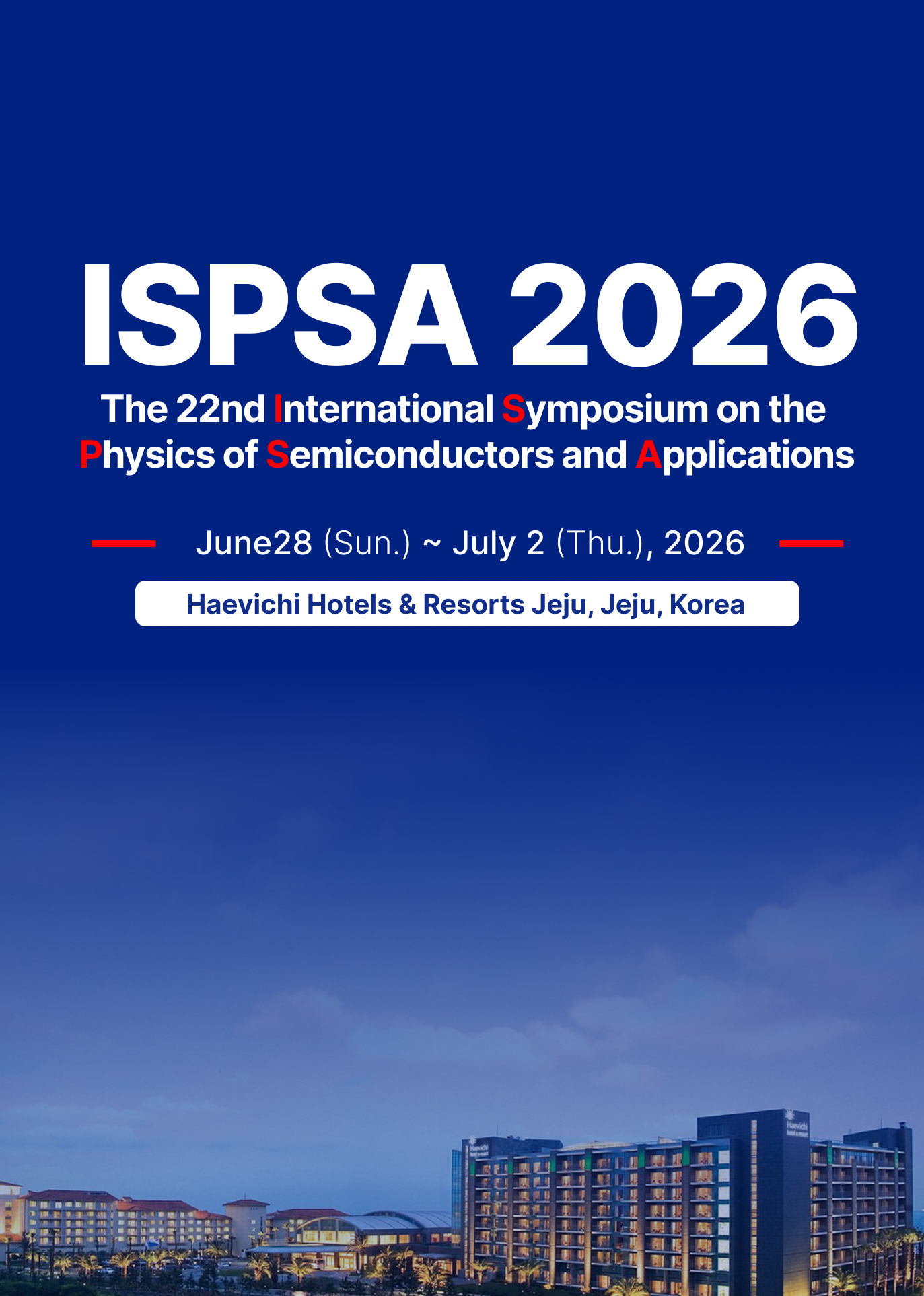
The 22nd International Symposium on the Physics of Semiconductors and Applications (ISPSA 2026) |
| 2026-06-28 ~ 2026-07-02 |

|
|
The 15th Asia-Pacific Conference on Transportation and the Environment (APTE 2026) |
| 2026-07-08 ~ 2026-07-10 |

|
|
ACEM26 / Structures26 (ACEM26) |
| 2026-08-24 ~ 2026-08-25 |
Journal Promotion

|
| Acta Koreana (Acta Koreana) |

|
| Acta Via Serica (AVS) |
|
| Advances in Concrete Construction (Advances in Concrete Construction ) |

|
| Advances in Nano Research (Advances in Nano Research) |

|
| Computers and Concrete (Computers and Concrete) |

|
| Earthquakes and Structures, An International Journal (Earthquakes and Structures) |

|
| Geomechanics and Engineering (Geomechanics and Engineering) |

|
| Journal of Information Processing Systems (JIPS) |

|
| Journal of Internet Computing and Services (KSII - JICS) |

|
| Membrane and Water Treatment (MWT) |

|
| Smart Structures and Systems (Smart Structures and Systems) |

|
| Steel and Composite Structures, An International Journal (Steel and Composite Structures) |
|
| Structural Engineering and Mechanics, An International Journal (Structural Engineering and Mechanics) |

|
| Wind and Structures, An International Journal (Wind and Structures) |




MANUSCRIPTLINK © 2015 -
