


12th International Conference on Natural Language Processing (NATP 2026)
NATP 2025
- URL: https://acsty2026.org/natp/index
- Event Date: 2026-02-27 ~ 2026-02-28
- Submission Date: 2026-02-07
- Organizer: NATP 2026
- Location: Vancouver, Canada
12th International Conference on Natural Language Processing (NATP 2026)
February 27 ~ 28, 2026, Vancouver, Canada
https://acsty2026.org/natp/index
Scope
12th International Conference on Natural Language Processing (NATP 2026) will provide an excellent international forum for sharing knowledge and results in theory, methodology and applications of Natural Language Processing. The conference looks for significant contributions to all major fields of the applications of Natural Language Processing Technology in theoretical and practical aspects.
Topics of interest include, but are not limited to, the following
Large Language Models, Generative AI & Foundation Models
- Pre‑training, fine‑tuning, adaptation
- Prompting, instruction tuning, alignment
- Reasoning, planning & tool‑use
- Emergent behaviors in LLMs
- Safety, ethics, bias & responsible NLP
Machine Translation, Multilinguality & Low‑Resource NLP
- Neural & LLM‑based MT
- Cross‑lingual transfer
- Low‑resource & endangered languages
- Community‑driven resource creation
- Linguistic typology & multilingual modeling
Information Extraction, Retrieval & Knowledge‑Augmented NLP
- Relation & event extraction
- Dense/neural retrieval
- Retrieval‑augmented generation (RAG)
- Knowledge graphs & structured knowledge integration
Question Answering, Text Understanding & Reasoning
- Open‑domain QA
- Reading comprehension
- Multi-hop reasoning
- Fact verification & truthfulness
Dialogue Systems, Conversational AI & Agentic NLP
- Task‑oriented dialogue
- Open‑domain conversation
- LLM‑based agents & tool‑use
- Multi‑agent communication
- Human–AI collaboration
Semantics, Discourse, Pragmatics & Text Generation
- Semantic parsing & structured meaning
- Discourse modeling & long‑context understanding
- Paraphrasing, entailment & generation
- Grounded semantics & world modeling
- Formal semantics & logical approaches
Speech, Multimodal & Embodied Language Processing
- End‑to‑end ASR/TTS
- Speech‑text models
- Vision‑language & audio‑language models
- Video‑language understanding
- Embodied agents & multimodal reasoning
Linguistic Resources, Corpora, Annotation & Evaluation
- Dataset creation & annotation
- Human‑subject studies & annotation psychology
- Evaluation of LLMs
- Benchmarking & reproducibility
- Robustness & adversarial testing
Computational Linguistics, Language Structure & Cognitive Modeling
- Morphology, phonology & syntax
- Cognitive modeling & psycholinguistics
- Human sentence processing
- Language acquisition & memory
- Mathematical linguistics
NLP for Humanities, Social Sciences & Cultural Analytics
- Computational social science
- Digital humanities
- Cultural and historical text analysis
- Social media analysis
- Political discourse & narrative modeling
Applied NLP, Education Technology & NLP for Social Good
- Healthcare, legal, financial, educational NLP
- Intelligent tutoring systems
- Automated essay scoring
- Crisis informatics
- Climate & environmental NLP
- Societal impact & policy implications
Efficiency, Optimization & Deployment of NLP Systems
- Model compression & distillation
- Efficient inference & hardware‑aware NLP
- Edge deployment
- Scalable training & serving
- Toolkits, infrastructure & open‑source ecosystems
Creativity, Narrative & Computational Arts
- Story generation
- Computational poetry
- Humor generation
- Co‑creative writing systems
- Creative multimodal generation
Theoretical Foundations & Analysis of NLP Models
- Theory of transformers & neural architectures
- Probing & interpretability
- Limits & capabilities of language models
- Formal models of computation for NLP
Paper Submission
Authors are invited to submit papers through the conference Submission System by February 07, 2026 (Final Call). Submissions must be original and should not have been published previously or be under consideration for publication while being evaluated for this conference. The proceedings of the conference will be published by Computer Science Conference Proceedings in Computer Science & Information Technology (CS & IT) series (Confirmed).
Selected papers from NATP 2026, after further revisions, will be published in the special issue of the following journal.
- International Journal of Web & Semantic Technology (IJWesT) - IS Indexed
- International Journal on Natural Language Computing (IJNLC)
- Information Technology in Industry (ITII)
Important Dates
(2nd Batch: Submission After December 29, 2025)
- Submission Deadline : February 07, 2026 (Final Call)
- Authors Notification : February 17, 2026
- Final Manuscript Due: February 21, 2026
Contact Us
Here's where you can reach us : natp@acsty2026.org (or) natpconfe@yahoo.com
Submission Link : https://acsty2026.org/submission/index.php
Event Promotion

|
|
The 13th International Conference on Quantum Dots (QD 2026) |
| 2026-05-17 ~ 2026-05-22 |

|
|
The 22nd International Symposium on the Physics of Semiconductors and Applications (ISPSA 2026) |
| 2026-06-28 ~ 2026-07-02 |

|
|
The 15th Asia-Pacific Conference on Transportation and the Environment (APTE 2026) |
| 2026-07-08 ~ 2026-07-10 |
|
|
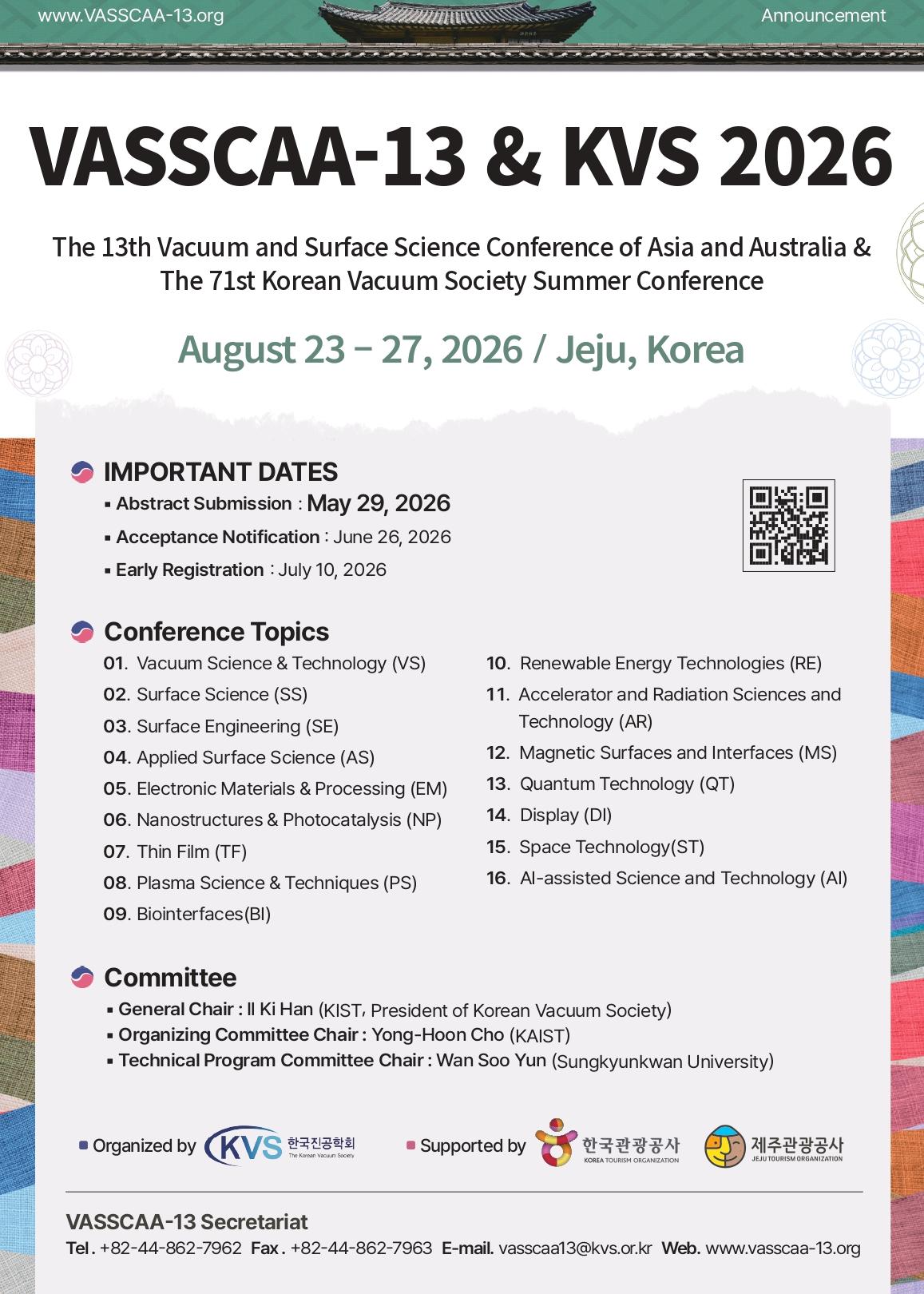
VASSCAA-13 & The 71st KVS Summer Annual Conference (VASSCAA 13) |
| 2026-08-23 ~ 2026-08-27 |

|
|
ACEM26 / Structures26 (ACEM26) |
| 2026-08-24 ~ 2026-08-25 |
Journal Promotion

|
| Acta Koreana (Acta Koreana) |

|
| Acta Via Serica (AVS) |

|
| Advances in Concrete Construction (Advances in Concrete Construction ) |

|
| Advances in Nano Research (Advances in Nano Research) |

|
| Computers and Concrete (Computers and Concrete) |

|
| Earthquakes and Structures, An International Journal (Earthquakes and Structures) |

|
| Geomechanics and Engineering (Geomechanics and Engineering) |

|
| Journal of Information Processing Systems (JIPS) |

|
| Journal of Internet Computing and Services (KSII - JICS) |

|
| Membrane and Water Treatment (MWT) |

|
| Smart Structures and Systems (Smart Structures and Systems) |

|
| Steel and Composite Structures, An International Journal (Steel and Composite Structures) |

|
| Structural Engineering and Mechanics, An International Journal (Structural Engineering and Mechanics) |

|
| Wind and Structures, An International Journal (Wind and Structures) |




MANUSCRIPTLINK © 2015 -
