


40th ROME World Congress on Advanced Computing, Electrical & Electronics Systems (ACEES-26) June 17-19, 2026 Rome (Italy)
ACEES-26
- URL: https://ureng.urst.org/conference/175
- Event Date: 2026-06-17 ~ 2026-06-19
- Submission Date: 2026-05-15
- Organizer: URENG
- Location: Rome, Italy
Computational Linguistics Computer Graphics Computer Hardware Design Computer Networks & Wireless Communication Bioinformatics & Computational Biology
Call for Papers: ACEES-26
Full Articles/ Reviews/ Shorts Papers/ Abstracts are welcomed in the following research fields:
1. Advanced Computing Systems
This pillar focuses on the architecture and methodologies used to process massive amounts of data and solve complex problems.
Parallel and Distributed Computing
Multicore and Many-core Architectures
Grid and Cloud Computing Frameworks
Message Passing Interfaces (MPI) and OpenMP
Quantum Computing
Quantum Mechanics Foundations (Superposition & Entanglement)
Qubits and Quantum Gates
Shor’s and Grover’s Algorithms
High-Performance Computing (HPC)
Supercomputer Architectures
Cluster Management and Scalability
GPU Acceleration (CUDA/OpenCL)
Edge and Fog Computing
Latency Reduction in IoT Networks
Decentralized Data Processing
Resource-Constrained Computing
2. Electrical Systems & Power Electronics
This section deals with the generation, conversion, and management of electrical energy, emphasizing efficiency and "smart" integration.
Smart Grid Technology
Wide Area Monitoring Systems (WAMS)
Microgrids and Distributed Energy Resources (DERs)
Smart Meters and Advanced Metering Infrastructure (AMI)
Power Electronics & Drives
Advanced Inverters and Converters (DC-DC, AC-DC)
Wide Bandgap Semiconductors (SiC and GaN)
Variable Frequency Drives (VFD) for Motor Control
Renewable Energy Integration
Photovoltaic (PV) System Modeling
Wind Turbine Control Systems
Energy Storage Systems (BMS - Battery Management Systems)
Electric Vehicle (EV) Systems
EV Drivetrain Architecture
Wireless Charging Technologies
Vehicle-to-Grid (V2G) Communication
3. Advanced Electronics & Embedded Systems
This area bridges the gap between physical hardware and software control, focusing on miniaturization and high-speed communication.
VLSI (Very Large Scale Integration) Design
FPGA and ASIC Design Flows
Low-Power CMOS Design
System-on-Chip (SoC) and Network-on-Chip (NoC)
Embedded Systems & IoT
Real-Time Operating Systems (RTOS)
Hardware-Software Co-design
Low-Power Wide-Area Networks (LPWAN)
Signal Processing & Communication
Digital Signal Processing (DSP) Algorithms
5G/6G Wireless Communication Protocols
Mixed-Signal Integrated Circuits
Neuro-Electronic Systems
Neuromorphic Computing Hardware
Brain-Computer Interfaces (BCI)
Bio-sensors and Implantable Electronics
4. Cross-Disciplinary Technologies
These subtopics sit at the intersection of all three fields, driving the "Intelligence" in modern systems.
Cyber-Physical Systems (CPS)
Modeling and Simulation of Complex Systems
Human-in-the-loop Systems
Hardware Security
Physical Unclonable Functions (PUFs)
Side-channel Attack Mitigation
Trusted Execution Environments (TEE)
AI for Systems
Machine Learning for Predictive Maintenance
Automated Circuit Design using AI
Hardware Acceleration for Deep Learning (NPU Design)
Event Promotion

|
|
The 13th International Conference on Quantum Dots (QD 2026) |
| 2026-05-17 ~ 2026-05-22 |
|
|
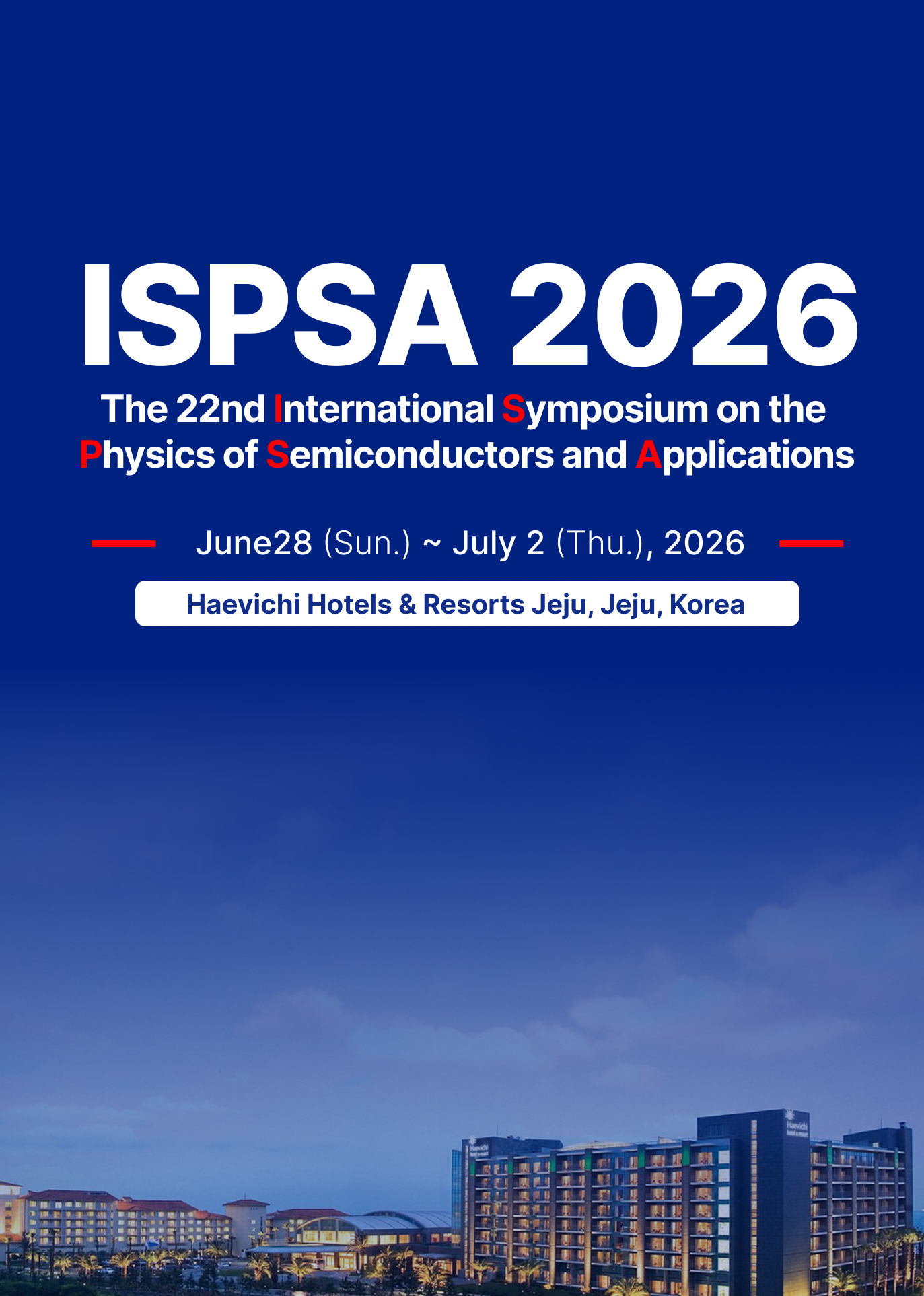
The 22nd International Symposium on the Physics of Semiconductors and Applications (ISPSA 2026) |
| 2026-06-28 ~ 2026-07-02 |

|
|
The 15th Asia-Pacific Conference on Transportation and the Environment (APTE 2026) |
| 2026-07-08 ~ 2026-07-10 |
|
|
ACEM26 / Structures26 (ACEM26) |
| 2026-08-24 ~ 2026-08-25 |
Journal Promotion

|
| Acta Koreana (Acta Koreana) |

|
| Acta Via Serica (AVS) |

|
| Advances in Concrete Construction (Advances in Concrete Construction ) |

|
| Advances in Nano Research (Advances in Nano Research) |

|
| Computers and Concrete (Computers and Concrete) |

|
| Earthquakes and Structures, An International Journal (Earthquakes and Structures) |

|
| Geomechanics and Engineering (Geomechanics and Engineering) |

|
| Journal of Information Processing Systems (JIPS) |

|
| Journal of Internet Computing and Services (KSII - JICS) |

|
| Membrane and Water Treatment (MWT) |

|
| Smart Structures and Systems (Smart Structures and Systems) |

|
| Steel and Composite Structures, An International Journal (Steel and Composite Structures) |

|
| Structural Engineering and Mechanics, An International Journal (Structural Engineering and Mechanics) |

|
| Wind and Structures, An International Journal (Wind and Structures) |




MANUSCRIPTLINK © 2015 -
