


BANGKOK 10th International Conference on Biology, Microbiology and Medical Sciences (BMMS-27) Jan. 25-27, 2027 Bangkok (Thailand)
BMMS-27
- URL: https://caeer.org/conference/417
- Event Date: 2027-01-25 ~ 2027-01-27
- Submission Date: 2027-01-01
- Organizer: CAEER
Environmental & Geological Engineering Civil Engineering Environmental & Geological Engineering Environmental Sciences
Topics
Full Articles/ Reviews/ Shorts Papers/ Abstracts are welcomed in the following research fields:
Core Disciplines of Civil Engineering
Structural Engineering
Mechanics of Materials: Stress, strain, shear force, and bending moment diagrams.
Structural Analysis: Determinate and indeterminate structures, matrix methods, and finite element analysis (FEA).
Design of Structures: Reinforced concrete, structural steel, timber, and masonry design.
Dynamic and Earthquake Engineering: Seismic hazard analysis, vibration control, and blast-resistant design.
Forensic Engineering: Structural failure analysis, retrofitting, and rehabilitation of aging infrastructure.
Geotechnical Engineering
Soil Mechanics: Soil classification, effective stress, permeability, seepage, and consolidation.
Foundation Engineering: Shallow and deep foundations (piles, caissons), retaining walls, and earth-retaining structures.
Slope Stability and Earthworks: Landslide mitigation, embankments, and dams.
Geoenvironmental Engineering: Contaminated land remediation, landfill liner design, and waste containment systems.
Rock Mechanics: Tunneling, rock blasting, and underground space exploitation.
Transportation Engineering
Geometric Design: Alignment of highways, railways, and runways (vertical and horizontal curves).
Pavement Engineering: Flexible and rigid pavement design, asphalt technology, and pavement management systems.
Traffic Engineering: Traffic flow theory, signal optimization, capacity analysis, and level of service (LOS).
Urban Transportation Planning: Travel demand forecasting, public transit systems, and multi-modal transport integration.
Water Resources Engineering
Fluid Mechanics and Hydraulics: Open channel flow, pipe networks, pump selection, and sediment transport.
Hydrology: Rainfall-runoff modeling, flood routing, groundwater hydrology, and watershed management.
Hydraulic Structures: Design of dams, spillways, levees, culverts, and canals.
Construction Engineering and Management
Project Scheduling and Planning: Critical Path Method (CPM), Program Evaluation and Review Technique (PERT), and Building Information Modeling (BIM).
Cost Estimating and Quantity Surveying: Capital budgeting, life-cycle cost analysis, and bidding strategies.
Construction Methods and Equipment: Heavy machinery selection, concrete placement technologies, and temporary structures.
Contracts and Specifications: Construction law, dispute resolution, and health and safety management.
Core Disciplines of Environmental Engineering
Water and Wastewater Treatment
Physical-Chemical Processes: Coagulation, flocculation, sedimentation, filtration, disinfection, and adsorption.
Biological Processes: Activated sludge, trickling filters, anaerobic digestion, and nutrient removal (nitrogen and phosphorus).
Advanced Water Reclamation: Membrane bioreactors, reverse osmosis, desalination, and potable reuse.
Air Quality and Atmospheric Engineering
Air Pollution Control: Electrostatic precipitators, baghouses, scrubbers, and catalytic converters.
Atmospheric Dispersion Modeling: Gaussian plume models and regional air quality forecasting.
Indoor Air Quality: Ventilation optimization, VOC mitigation, and mold control.
Solid and Hazardous Waste Management
Municipal Solid Waste: Collection routing, recycling facilities, composting, and waste-to-energy technologies.
Hazardous Waste Treatment: Incineration, stabilization, solidification, and Superfund site management.
Environmental Remediation
In-Situ Treatment: Bioremediation, phytoremediation, permeable reactive barriers, and soil vapor extraction.
Ex-Situ Treatment: Pump-and-treat systems and soil washing.
Highly Interrelated and Cross-Disciplinary Fields
These areas represent the critical overlap where Civil and Environmental engineering merge to solve complex modern challenges.
Sustainable Infrastructure and Urban Systems
Green Building Design: LEED certification framework, low-carbon concrete, and energy-efficient building envelopes.
Low Impact Development (LID): Permeable pavements, green roofs, and bioretention cells for urban stormwater management.
Smart Cities: IoT sensor networks for structural health monitoring, smart grids, and real-time traffic management.
Environmental Impact and Risk Assessment
Life Cycle Assessment (LCA): Quantifying embodied carbon and environmental footprints of construction materials.
Environmental Impact Statements (EIS): Assessing the ecological consequences of mega-infrastructure projects (e.g., dams, highways).
Climate Change Adaptation: Designing infrastructure to withstand sea-level rise, increased flood frequencies, and extreme heat events.
Coastal and Marine Engineering
Coastal Protection: Breakwaters, seawalls, and beach nourishment.
Hydrodynamic Modeling: Estuary circulation, wave mechanics, and pollutant transport in ocean outfalls.
Public Health and Environmental Toxicology
Epidemiology in Engineering: Tracking waterborne pathogens, antibiotic-resistant bacteria, and emerging contaminants like PFAS in urban water cycles.
Event Promotion
Journal Promotion

|
| Acta Koreana (Acta Koreana) |

|
| Acta Via Serica (AVS) |
|
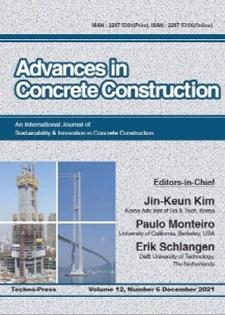
| Advances in Concrete Construction (Advances in Concrete Construction ) |

|
| Advances in Nano Research (Advances in Nano Research) |

|
| Computers and Concrete (Computers and Concrete) |
|
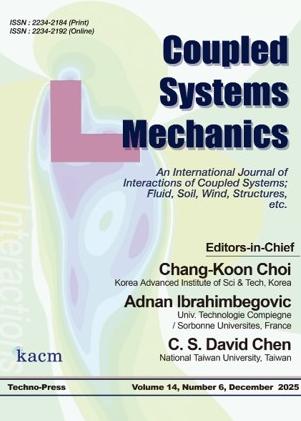
| Coupled Systems Mechanics (Coupled Systems Mechanics) |

|
| Earthquakes and Structures, An International Journal (Earthquakes and Structures) |

|
| Geomechanics and Engineering (Geomechanics and Engineering) |

|
| Journal of Information Processing Systems (JIPS) |

|
| Journal of Internet Computing and Services (KSII - JICS) |

|
| Membrane and Water Treatment (MWT) |

|
| Smart Structures and Systems (Smart Structures and Systems) |
|
| Steel and Composite Structures, An International Journal (Steel and Composite Structures) |
|
| Structural Engineering and Mechanics, An International Journal (Structural Engineering and Mechanics) |

|
| Wind and Structures, An International Journal (Wind and Structures) |




MANUSCRIPTLINK © 2015 -
