


VIETNAM 10th International Conference on “Education, Economics, Marketing & Management Studies” (E2M2S-27) scheduled on Jan. 18-20, 2027 Ho Chi Minh City (Vietnam)
E2M2S-27
- URL: https://earhm.org/conference/347
- Event Date: 2027-01-18 ~ 2027-01-20
- Submission Date: 2027-01-01
- Organizer: EARHM
Educational Administration Educational Technology Education Educational Technology Higher Education
Call for papers/Topics
All Abstracts, Reviews, short articles, Full articles, Posters are welcomed related with any of the following research fields:
1. Independent Core Disciplines
These are the foundational pillars of each field, representing their distinct academic and professional boundaries.
Economics
Microeconomics: Consumer behavior, market structures (monopoly, oligopoly), supply and demand dynamics, and price theory.
Macroeconomics: National income, inflation, unemployment, monetary and fiscal policies, and economic growth models.
Econometrics: Statistical methods and mathematical models used to analyze economic data.
Management Studies
Organizational Behavior: Individual and group dynamics, corporate culture, motivation, and leadership styles.
Strategic Management: Long-term planning, competitive advantage formulation, and corporate governance.
Operations Management: Supply chain logistics, quality control, and process optimization.
Marketing
Consumer Behavior: Psychological and social factors influencing purchasing decisions.
Brand Management: Brand equity, positioning, and identity development.
Digital Marketing & Analytics: SEO, content marketing, social media strategies, and data-driven performance tracking.
Education
Pedagogy and Curriculum Design: Methodologies of teaching and the structured development of educational programs.
Educational Psychology: Cognitive development, learning theories, and student motivation.
Comparative Education: Analysis of different educational systems across cultures and countries.
2. Interrelated Cross-Disciplinary Topics
When these fields overlap, they create specialized, high-impact areas of study.
The Economics of Education (Economics + Education)
This subtopic views education not just as a social good, but as an economic engine.
Human Capital Theory: How investing in education increases individual productivity and national economic growth.
Education Finance: The study of school funding, student loan structures, and public vs. private financing of universities.
Labor Market Returns: Analyzing the direct correlation between educational attainment and income levels.
Institutional Management & Educational Leadership (Management + Education)
Running modern educational institutions requires heavy-duty corporate management principles.
Academic Governance: Managing faculty tenure, accreditation, and institutional compliance.
Strategic Enrollment Management: Applying corporate scaling models to student recruitment and retention.
Resource Allocation in Schools: Budgeting and managing physical and digital infrastructure in academic settings.
Higher Education Marketing (Marketing + Education)
Universities and online platforms operate in a highly competitive global marketplace.
Student Recruitment Strategies: Inbound marketing tactics used to attract domestic and international students.
Institutional Branding: Shaping the reputation, ranking awareness, and prestige of an educational brand.
Alumni Relations & Fundraising: Using relationship marketing to drive donations and community engagement.
Managerial Economics (Economics + Management)
The application of economic theories to solve business decision-making problems.
Risk Analysis and Capital Budgeting: Using economic forecasting to guide corporate investment decisions.
Pricing Strategies: How firms set prices based on market structure, elasticity, and cost structures.
Game Theory: Strategic decision-making where the outcome depends on the choices of independent actors.
Marketing Management (Marketing + Management)
The bridge between creative marketing execution and corporate oversight.
Marketing Audits & Control: Assessing the financial performance and efficiency of marketing campaigns.
Product Lifecycle Management (PLM): Managing a product from its initial R&D stage through growth, maturity, and decline.
Sales Force Management: Structuring, motivating, and directing a corporate sales team.
Behavioral Economics & Neuromarketing (Economics + Marketing)
Understanding the irrationality of human choices and how it impacts markets.
Heuristics and Biases: How cognitive shortcuts influence consumer buying habits.
Nudge Theory: Designing choice architectures to subtly steer consumer or citizen behavior without mandates.
Market Anomalies: Instances where real-world market outcomes contradict traditional economic theories.
3. The Grand Quad-Intersection
At the absolute center, where Education, Economics, Marketing, and Management all collide simultaneously, we find:
The EdTech Industry & Corporate E-Learning: The business of educational technology. It requires Education (pedagogy), Economics (market viability/funding), Management (software development and scaling), and Marketing (user acquisition).
Corporate Training & Workforce Development: How modern companies manage their internal intellectual capital. It involves Management (HR infrastructure), Education (instructional design), Economics (ROI of training), and Marketing (internal communication and adoption).
The Commercialization of Higher Education: The global shift of universities operating as corporate, profit-conscious entities seeking market share while delivering public education.
Journal Promotion

|
| Acta Koreana (Acta Koreana) |

|
| Acta Via Serica (AVS) |

|
| Advances in Concrete Construction (Advances in Concrete Construction ) |

|
| Advances in Nano Research (Advances in Nano Research) |

|
| Computers and Concrete (Computers and Concrete) |

|
| Coupled Systems Mechanics (Coupled Systems Mechanics) |

|
| Earthquakes and Structures, An International Journal (Earthquakes and Structures) |

|
| Geomechanics and Engineering (Geomechanics and Engineering) |
|
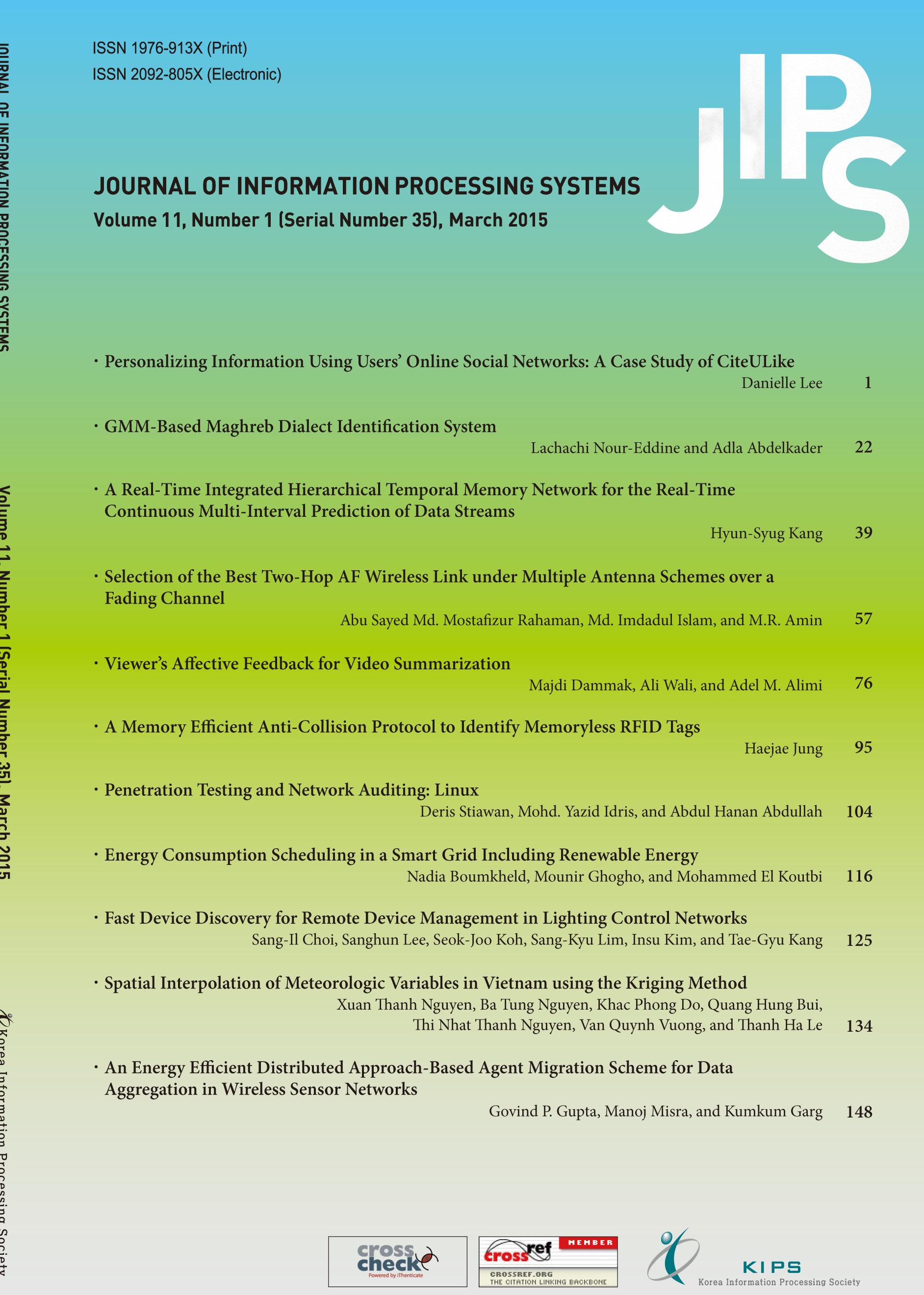
| Journal of Information Processing Systems (JIPS) |

|
| Journal of Internet Computing and Services (KSII - JICS) |

|
| Membrane and Water Treatment (MWT) |

|
| Smart Structures and Systems (Smart Structures and Systems) |

|
| Steel and Composite Structures, An International Journal (Steel and Composite Structures) |

|
| Structural Engineering and Mechanics, An International Journal (Structural Engineering and Mechanics) |

|
| Wind and Structures, An International Journal (Wind and Structures) |




MANUSCRIPTLINK © 2015 -
