


17th BANGKOK International Conference on Advanced Manufacturing & System Optimization (BAMSO-26) scheduled on March 23-25, 2026 Bangkok (Thailand)
BAMSO-26
- URL: https://eamae.erpub.org/conference/179
- Event Date: 2026-03-23 ~ 2026-03-25
- Submission Date: 2026-03-02
- Organizer: EAMAE
- Location: Bangkok, Thailand
Computing Systems Manufacturing & Machinery
Topics of Interest for Submission include, but are Not Limited to:
1. Advanced Manufacturing Technologies
This area focuses on the cutting-edge processes and hardware that enable complex and highly precise production.
Additive Manufacturing (3D Printing):
Metal AM and the development of new alloys (e.g., aerospace and biomedical applications).
Multi-Material and Hybrid AM (combining additive with subtractive processes).
Process control and quality assurance in layer-by-layer fabrication.
Smart Automation and Robotics:
Collaborative Robots (Cobots) and human-robot interaction in assembly.
Autonomous Mobile Robots (AMRs) for intralogistics and material handling.
Precision motion control and optimal trajectory generation for multi-axis machine tools.
Advanced Materials Processing:
Micro-/Nano-Precision Fabrication and ultra-precision machining.
Laser-based processes (machining, welding) and energy beam processing.
Design and manufacturing of advanced composites and smart/active materials.
2. System Optimization and Data Science
This theme addresses the modeling, analytical tools, and computational methods used to improve manufacturing performance.
Industry 4.0 and Digital Transformation:
Development and application of Digital Twins for real-time simulation and testing of production systems.
Industrial Internet of Things (IIoT), sensor networks, and data integration.
Cyber-Physical Systems (CPS) and IT/OT (Information Technology/Operational Technology) network convergence.
Artificial Intelligence (AI) and Machine Learning (ML):
Predictive Maintenance (PdM): Using ML algorithms to forecast equipment failures and minimize unplanned downtime.
Process Modeling and Control: ML-based process optimization for autonomous control and anomaly detection.
Zero-Defect Manufacturing (ZDM): Using AI for real-time quality inspection and control.
Optimization Methodologies:
Application of Statistical Process Control (SPC) and Design of Experiments (DOE).
Algorithms like Genetic Algorithms (GA), MOORA, and TOPSIS for single- and multi-objective optimization (e.g., maximizing efficiency while minimizing cost).
Implementing Lean Manufacturing and Six Sigma methodologies (e.g., DMAIC, Value Stream Mapping) with digital tools.
3. System-Level Applications and Sustainability
These topics look at the broader impact and management of optimized manufacturing systems across the supply chain.
Supply Chain Optimization and Resilience:
AI-driven demand forecasting and inventory management.
Creating resilient supply chains that can adapt to global disruptions.
Logistics and transport optimization using real-time data.
Sustainable and Green Manufacturing:
Carbon Neutral Manufacturing: Strategies for reducing energy consumption and greenhouse gas emissions.
Life Cycle Assessment (LCA) and end-of-use recovery for products.
Remanufacturing and closed-loop recycling systems.
Design and Manufacturing Integration:
Design for Manufacturing (DFM) and Design for Assembly (DFA).
Bottom-up cost and material-energy flow analysis to evaluate competing manufacturing routes.
Manufacturing Execution Systems (MES) and Enterprise Resource Planning (ERP) integration for unified data flow.
Event Promotion

|
|
The 13th International Conference on Quantum Dots (QD 2026) |
| 2026-05-17 ~ 2026-05-22 |
|
|
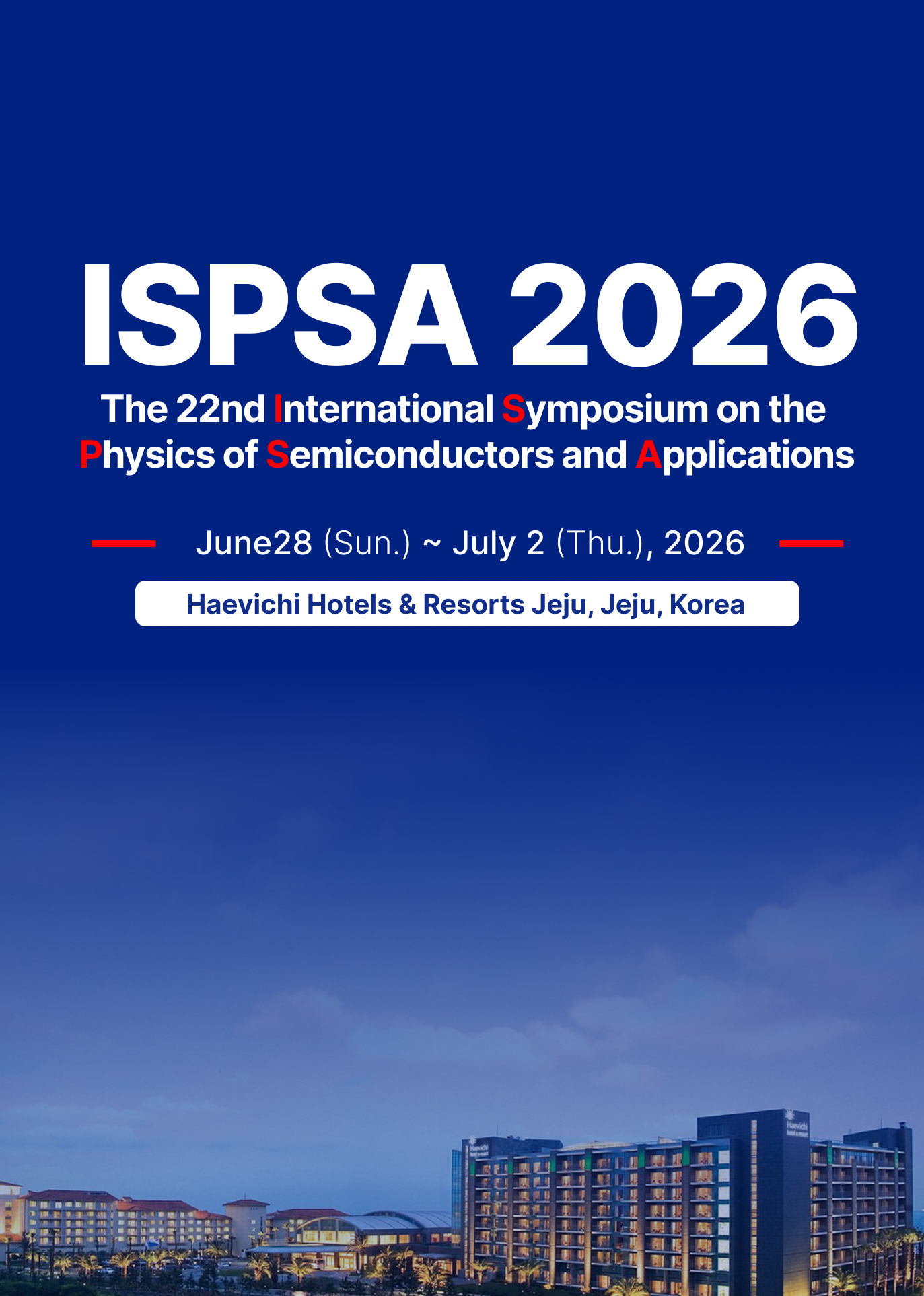
The 22nd International Symposium on the Physics of Semiconductors and Applications (ISPSA 2026) |
| 2026-06-28 ~ 2026-07-02 |

|
|
The 15th Asia-Pacific Conference on Transportation and the Environment (APTE 2026) |
| 2026-07-08 ~ 2026-07-10 |
Journal Promotion

|
| Acta Koreana (Acta Koreana) |
|
| Acta Via Serica (AVS) |

|
| Earthquakes and Structures, An International Journal (Earthquakes and Structures) |
|
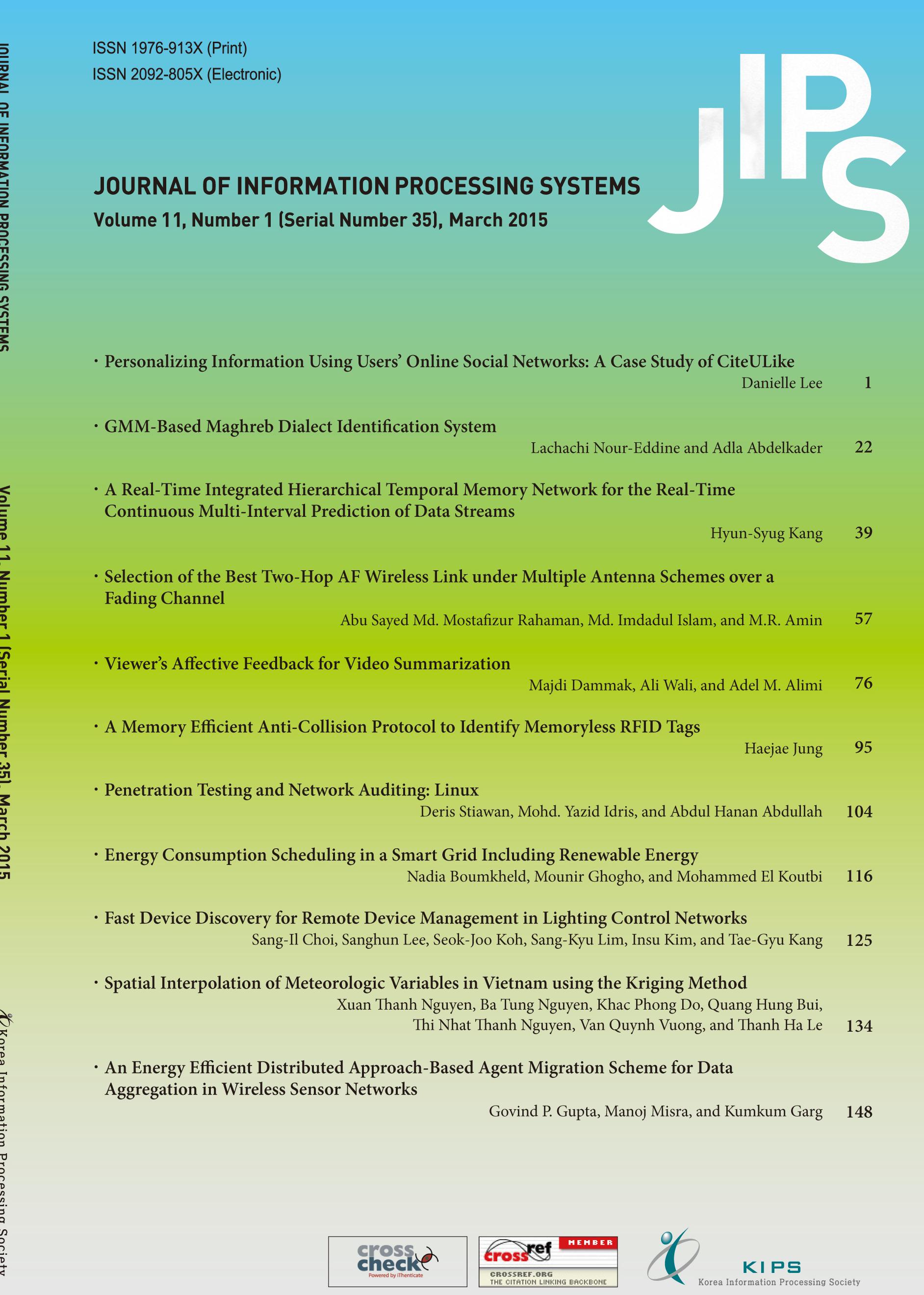
| Journal of Information Processing Systems (JIPS) |

|
| Journal of Internet Computing and Services (KSII - JICS) |

|
| Membrane and Water Treatment (MWT) |

|
| Smart Structures and Systems (Smart Structures and Systems) |




MANUSCRIPTLINK © 2015 -
