


70th ISTANBUL World Congress on Artificial Intelligence: Applications, Challenges & Impacts (WCAIACI-26)
WCAIACI-26
- URL: https://etrg.org/conference/457
- Event Date: 2026-06-01 ~ 2026-06-03
- Submission Date: 2026-05-15
- Organizer: ETRG
- Location: Istanbul, Turkey
Call for papers/Topics
Full Articles/ Reviews/ Shorts Papers/ Abstracts are welcomed in the following research fields:
1. AI Applications
AI applications are generally categorized by the industry they serve or the core technology they employ.
Industry-Specific Applications
Healthcare:
Medical Imaging: Computer vision for detecting tumors in X-rays, MRIs, and CT scans.
Drug Discovery: Using deep learning to predict molecular interactions and accelerate vaccine development.
Personalized Medicine: Genomic analysis to tailor treatments to individual DNA.
Finance & Banking:
Fraud Detection: Real-time monitoring of transactions for anomalous patterns.
Algorithmic Trading: High-frequency trading based on predictive market models.
Credit Scoring: Using alternative data to assess loan eligibility for the "unbanked."
Transportation:
Autonomous Vehicles: Self-driving cars, trucks, and delivery drones.
Traffic Management: Smart city grids that optimize traffic light timing to reduce congestion.
Retail & E-commerce:
Recommendation Engines: "Customers who bought this also bought..." algorithms.
Dynamic Pricing: Adjusting prices in real-time based on demand, inventory, and competitor data.
Core Functional Applications
Natural Language Processing (NLP): Virtual assistants (Siri, Alexa), real-time translation, and sentiment analysis.
Computer Vision: Facial recognition for security, gesture control, and industrial quality inspection.
Generative AI: Automated content creation (text, images, video, and music composition).
2. AI Challenges (The hurdles to overcome)
Technical and ethical hurdles remain significant barriers to the safe and effective deployment of AI.
Technical Challenges
The "Black Box" Problem (Explainability): The difficulty in understanding how deep learning models reach specific conclusions.
Data Quality & Scarcity: AI requires massive, clean, and representative datasets; "garbage in, garbage out" remains a core issue.
Computing Power & Energy: The high environmental cost and hardware requirements (GPUs/TPUs) for training large-scale models.
AI Integration: The struggle to merge modern AI tools with legacy software systems in established corporations.
Ethical & Legal Challenges
Algorithmic Bias: Systems inheriting human prejudices from historical data (e.g., in hiring or law enforcement).
Privacy & Surveillance: The tension between data-driven insights and the right to individual anonymity.
Liability & Accountability: Determining who is responsible (the developer, the owner, or the machine) when an AI makes a mistake.
Intellectual Property: Legal disputes over whether AI-generated works can be copyrighted or if training data violates fair use.
3. AI Impacts (The societal effects)
The widespread adoption of AI is fundamentally reshaping how society functions.
Economic & Workforce Impacts
Job Displacement vs. Augmentation: The replacement of routine manual and cognitive tasks (automation) versus the creation of new AI-centric roles.
Productivity Gains: Significant increases in GDP through optimized supply chains and faster R&D.
Wealth Inequality: The concern that AI benefits may accrue primarily to large tech firms and capital owners, widening the gap between socioeconomic classes.
Societal & Psychological Impacts
Deepfakes & Misinformation: The erosion of public trust due to hyper-realistic fake images, audio, and video.
Human-Robot Interaction: The growth of "socially assistive robots" for elderly care and its effect on human social dynamics.
Democratization of Knowledge: High-level expertise becoming available to anyone with an internet connection via AI tutors and diagnostic tools.
Event Promotion

|
|
The 13th International Conference on Quantum Dots (QD 2026) |
| 2026-05-17 ~ 2026-05-22 |
|
|
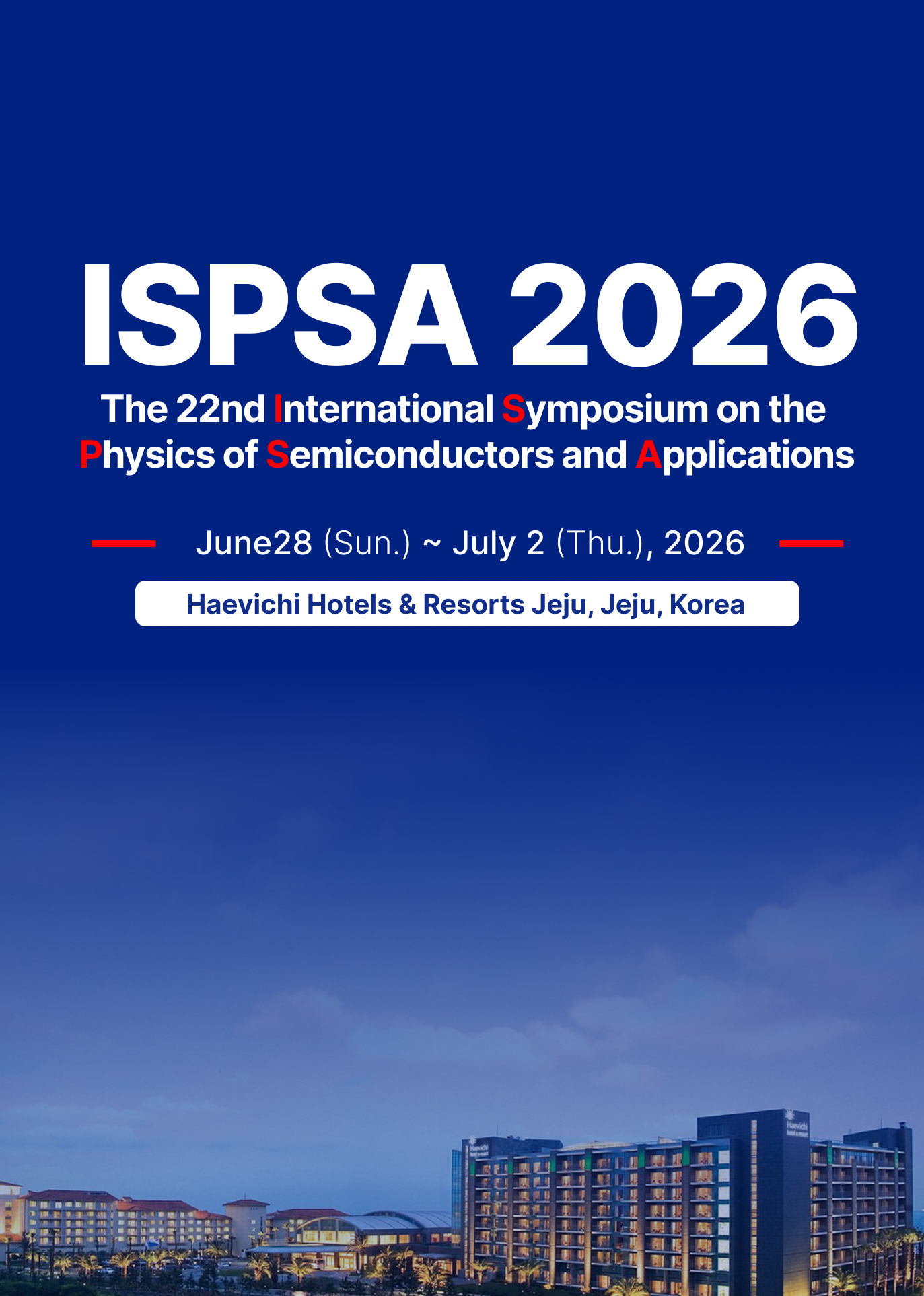
The 22nd International Symposium on the Physics of Semiconductors and Applications (ISPSA 2026) |
| 2026-06-28 ~ 2026-07-02 |

|
|
The 15th Asia-Pacific Conference on Transportation and the Environment (APTE 2026) |
| 2026-07-08 ~ 2026-07-10 |

|
|
ACEM26 / Structures26 (ACEM26) |
| 2026-08-24 ~ 2026-08-25 |
Journal Promotion
|
| Acta Koreana (Acta Koreana) |

|
| Acta Via Serica (AVS) |

|
| Advances in Concrete Construction (Advances in Concrete Construction ) |

|
| Advances in Nano Research (Advances in Nano Research) |

|
| Computers and Concrete (Computers and Concrete) |

|
| Earthquakes and Structures, An International Journal (Earthquakes and Structures) |

|
| Geomechanics and Engineering (Geomechanics and Engineering) |
|
| Journal of Information Processing Systems (JIPS) |

|
| Journal of Internet Computing and Services (KSII - JICS) |

|
| Membrane and Water Treatment (MWT) |

|
| Smart Structures and Systems (Smart Structures and Systems) |

|
| Steel and Composite Structures, An International Journal (Steel and Composite Structures) |

|
| Structural Engineering and Mechanics, An International Journal (Structural Engineering and Mechanics) |

|
| Wind and Structures, An International Journal (Wind and Structures) |




MANUSCRIPTLINK © 2015 -
