


28th PARIS International Conference on Electrical, Electronics & Communication Engineering (PEECE-26) June 24-26, 2026 Paris (France)
PEECE-26
- URL: https://eaceee.erpub.org/conference/205
- Event Date: 2026-06-24 ~ 2026-06-26
- Submission Date: 2026-06-01
- Organizer: EACEEE
- Location: Paris, France
Electrochemistry Computer Networks & Wireless Communication Microelectronics & Electronic Packaging Communicable Diseases Communication
Call for papers/Topics
Topics of Interest for Submission include, but are Not Limited to:
1. Electrical Engineering (Power & Energy)
This pillar focuses on the generation, transmission, and utilization of electricity on a large scale.
Circuit Theory & Analysis:
Network theorems (Thevenin, Norton, Superposition).
Transient and steady-state analysis.
AC/DC circuit fundamentals.
Power Systems:
Generation (Thermal, Hydro, Nuclear, and Renewables).
Transmission and Distribution (Grid stability, HVDC).
Smart Grids and Microgrids.
Electrical Machines:
Transformers (Step-up/Step-down).
DC Motors and Generators.
Synchronous and Induction Machines.
Power Electronics:
Inverters, Converters (Buck/Boost), and Rectifiers.
Motor drives and speed control.
2. Electronics Engineering (Devices & Circuits)
This area focuses on the behavior of electrons in semiconductors to create components that process information.
Solid-State Devices:
Semiconductor physics (P-N junctions).
Transistors (BJT, MOSFET, FinFET).
Optoelectronic devices (LEDs, Solar cells).
Analog Electronics:
Operational Amplifiers (Op-Amps).
Oscillators and Multivibrators.
Filter design (Active and Passive).
Digital Electronics:
Logic gates and Boolean algebra.
Combinational circuits (Multiplexers, Adders).
Sequential circuits (Flip-flops, Counters, Memory).
VLSI (Very Large Scale Integration):
CMOS fabrication technology.
FPGA and ASIC design.
Hardware Description Languages (Verilog/VHDL).
3. Communication Engineering (Data & Signals)
This field deals with the transmission of information across various mediums.
Signals and Systems:
Continuous and Discrete-time signals.
Fourier, Laplace, and Z-Transforms.
Convolution and Correlation.
Analog & Digital Communication:
Modulation techniques (AM, FM, PM).
Digital Modulation (ASK, FSK, PSK, QAM).
Information theory and Coding (Error detection/correction).
Electromagnetics & Antennas:
Maxwell’s Equations.
Wave propagation and Waveguides.
Antenna types and Radiation patterns.
Networking & Wireless:
Mobile communication (4G, 5G, and 6G concepts).
Satellite and Optical Fiber Communication (OFC).
Computer Networks (TCP/IP, IoT protocols).
4. Interdisciplinary & Advanced Topics
These subtopics bridge the gap between the three main pillars and incorporate computer science and physics.
Control Systems: Feedback loops, PID controllers, and Robotics.
Signal Processing: Digital Signal Processing (DSP), Image processing, and Speech recognition.
Embedded Systems: Microcontrollers (8051, ARM, AVR), RTOS (Real-Time Operating Systems), and IoT.
Instrumentation: Sensors, Actuators, and Data Acquisition Systems (DAQ).
Nanotechnology: Nano-electronics and Quantum computing basics.
Event Promotion
|
|
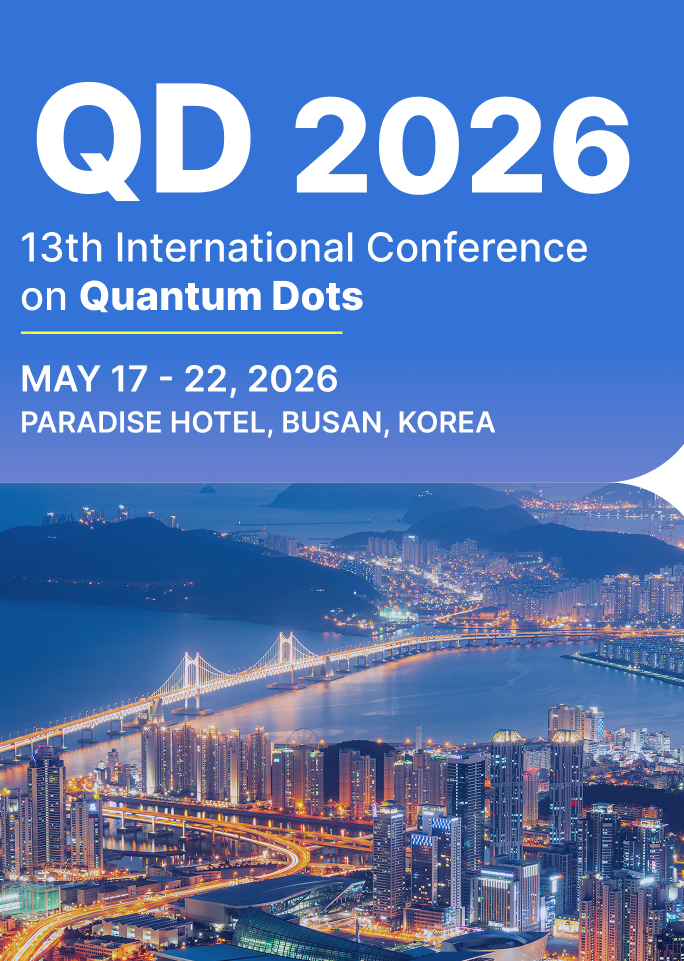
The 13th International Conference on Quantum Dots (QD 2026) |
| 2026-05-17 ~ 2026-05-22 |
|
|
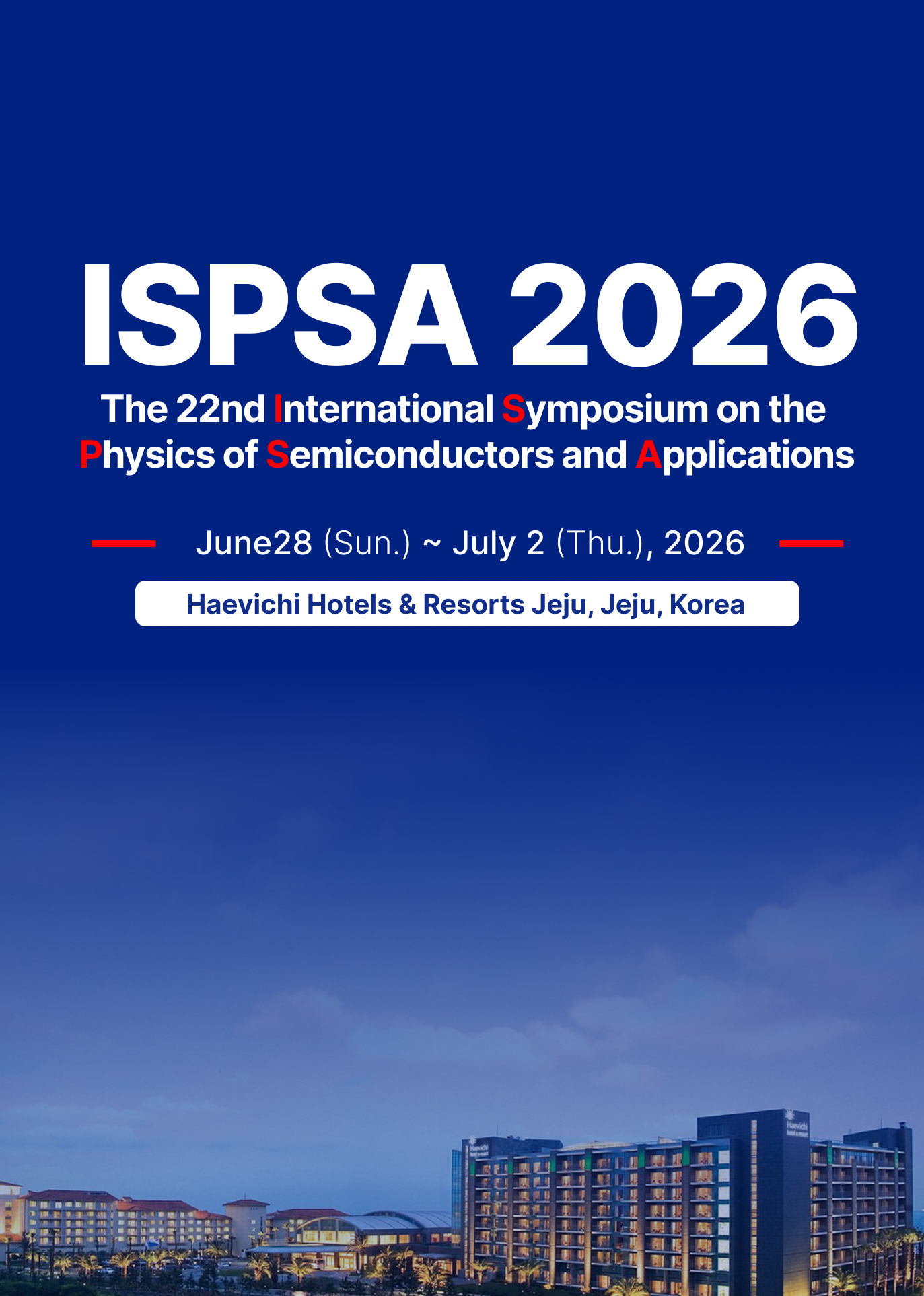
The 22nd International Symposium on the Physics of Semiconductors and Applications (ISPSA 2026) |
| 2026-06-28 ~ 2026-07-02 |

|
|
The 15th Asia-Pacific Conference on Transportation and the Environment (APTE 2026) |
| 2026-07-08 ~ 2026-07-10 |






MANUSCRIPTLINK © 2015 -
