


34th PARIS International Congress on Smart Cities, Civil Engineering, & Automation Systems (SCCEAS-26) scheduled on April 15-17, 2026 Paris (France)
SCCEAS-26
- URL: https://earcee.eares.org/conference/313
- Event Date: 2026-04-15 ~ 2026-04-17
- Submission Date: 2026-04-01
- Organizer: EARCEE
- Location: Paris, France
Automation & Control Theory Civil Engineering
Theme 1: Smart Infrastructure and Digital Twins (Civil Engineering & Automation)
This theme focuses on embedding digital and automated technologies into the physical built environment.
1. Advanced Infrastructure Monitoring and Maintenance
Structural Health Monitoring (SHM): Real-time sensing, data analytics, and predictive maintenance for bridges, tunnels, and buildings.
Intelligent Infrastructure: Self-diagnosing and self-healing materials (e.g., smart concrete), and autonomous inspection systems (using drones/robotics).
Utility Automation: Smart energy grids, automated power quality control, and intelligent monitoring systems for gas and water pipelines.
2. Digital Construction and Modeling
Building Information Modeling (BIM) 2.0: Integration of BIM with IoT and Artificial Intelligence (AI) for lifecycle management.
Digital Twins: Creation and use of real-time virtual models of cities, buildings, or infrastructure segments for simulation and optimization.
Automated Construction: Robotics and automation in construction processes, 3D printing of construction materials and structures.
Theme 2: Enabling Technologies (Automation & Smart Cities)
These are the fundamental technological pillars that make smart city concepts possible.
1. Internet of Things (IoT) and Sensing
Pervasive Urban Sensing: Deploying massive sensor networks (wired and wireless) for environmental and traffic monitoring.
Edge AI and TinyML: Processing data in real-time on low-power, small-scale devices at the edge of the network.
Secure IoT Frameworks: Novel communication protocols and frameworks for vulnerability assessment in smart environments.
2. Artificial Intelligence (AI) and Data Analytics
Urban Data Analytics and Predictive Modeling: Using Big Data and Machine Learning (ML) to anticipate urban dynamics (e.g., traffic flow, resource demand, crime hotspots).
AI-Driven Decision Support Systems: Tools for city planners and administrators to optimize public services and resource allocation.
Responsible and Ethical AI: Addressing bias, privacy, and accountability in AI-enabled public systems and citizen tracking.
Theme 3: Sustainable Systems and Urban Services (Smart Cities & Environmental)
This theme addresses how technology is used to manage resources, mobility, and the environment efficiently.
1. Smart Mobility and Transportation
Connected and Automated Vehicles (CAVs): Infrastructure requirements and civil engineering challenges for autonomous vehicle integration.
Intelligent Transportation Systems (ITS): Smart system control, traffic flow optimization, and real-time traveler sensing technologies.
Mobility as a Service (MaaS): Data-driven integration of public transport, ride-sharing, and micro-mobility.
2. Sustainable Resource Management
Smart Water Management: Automated monitoring and control of urban water and drainage systems (SUDS) to prevent flooding and manage consumption.
Energy Efficiency: Intelligent control systems for power management, smart grids, and optimizing consumption in smart houses and city-wide utilities.
Smart Waste Management: Automated sorting, route optimization for collection, and implementation of the Circular Economy in urban systems.
3. Urban Planning and Resilience
Climate-Resilient Infrastructure Design: Engineering for extreme weather, disaster-resilient structures, and urban heat island mitigation.
Spatial Information Technology: Geographic Information Systems (GIS) and remote sensing for urban planning and policy.
Ecological Cities and Green Infrastructure: Integrating digital tools with ecosystem restoration and regenerative urban design principles.
Event Promotion

|
|
The 13th International Conference on Quantum Dots (QD 2026) |
| 2026-05-17 ~ 2026-05-22 |
|
|
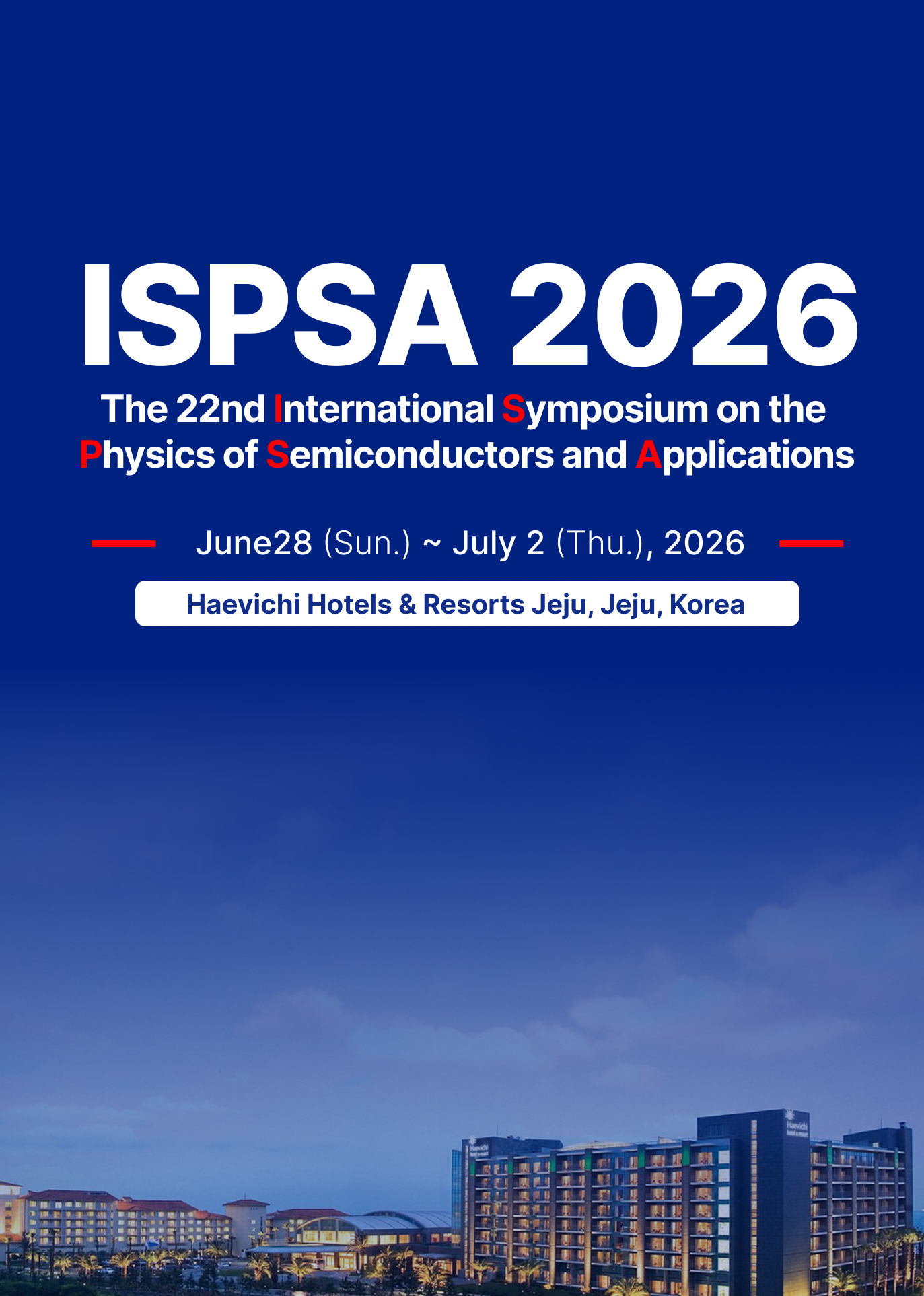
The 22nd International Symposium on the Physics of Semiconductors and Applications (ISPSA 2026) |
| 2026-06-28 ~ 2026-07-02 |

|
|
The 15th Asia-Pacific Conference on Transportation and the Environment (APTE 2026) |
| 2026-07-08 ~ 2026-07-10 |
|
|
ACEM26 / Structures26 (ACEM26) |
| 2026-08-24 ~ 2026-08-25 |
Journal Promotion

|
| Acta Koreana (Acta Koreana) |

|
| Acta Via Serica (AVS) |

|
| Computers and Concrete (Computers and Concrete) |

|
| Earthquakes and Structures, An International Journal (Earthquakes and Structures) |

|
| Geomechanics and Engineering (Geomechanics and Engineering) |

|
| Journal of Information Processing Systems (JIPS) |

|
| Journal of Internet Computing and Services (KSII - JICS) |

|
| Membrane and Water Treatment (MWT) |

|
| Smart Structures and Systems (Smart Structures and Systems) |

|
| Steel and Composite Structures, An International Journal (Steel and Composite Structures) |
|
| Structural Engineering and Mechanics, An International Journal (Structural Engineering and Mechanics) |

|
| Wind and Structures, An International Journal (Wind and Structures) |




MANUSCRIPTLINK © 2015 -
