


LISBON 6th International Conference on Aeronautical, Robotics and Manufacturing Engineering (ARME-27) scheduled on Feb. 3-5, 2027 Lisbon (Portugal)
ARME-27
- URL: https://eamae.erpub.org/conference/249
- Event Date: 2027-02-03 ~ 2027-02-05
- Submission Date: 2027-01-20
- Organizer: EAMAE
Manufacturing & Machinery Robotics
Call for papers/Topics
Topics of Interest for Submission include, but are Not Limited to:
1. Core Independent Disciplines
These topics represent the foundational pillars specific to each individual field.
Aeronautical Engineering
Aerodynamics: Fluid dynamics, lift and drag mechanics, compressible flow, and boundary layer theory.
Flight Mechanics and Stability: Aircraft performance, static/dynamic stability, and control surfaces.
Propulsion Systems: Air-breathing engines (turbofans, turbojets, ramjets) and rocket propulsion.
Aerospace Structures: Lightweight materials, thin-walled structures, and aeroelasticity.
Robotics Engineering
Kinematics and Dynamics: Forward and inverse kinematics, Jacobian matrices, and rigid body dynamics.
Actuators and Sensors: Servos, brushless motors, LiDAR, IMUs, ultrasonic sensors, and computer vision hardware.
Robot Programming and OS: Robot Operating System (ROS/ROS2), motion planning algorithms ($A^*$ or RRT), and localization (SLAM).
Artificial Intelligence in Robotics: Machine learning for perception, reinforcement learning for control, and behavioral cloning.
Manufacturing Engineering
Forming and Shaping Processes: Casting, forging, extrusion, and injection molding.
Machining Operations: Subtractive manufacturing (CNC milling, turning), EDM (Electrical Discharge Machining), and laser cutting.
Quality Control and Metrology: Six Sigma, statistical process control (SPC), coordinate measuring machines (CMM), and GD&T (Geometric Dimensioning and Tolerancing).
Operations Management: Lean manufacturing, supply chain logistics, inventory control, and factory layout design.
2. Interrelated Cross-Disciplinary Topics
These topics represent the critical intersections where two or more of these engineering fields merge.
Aerospace Manufacturing (Aeronautical + Manufacturing)
Advanced Composite Fabrication: Automated Fiber Placement (AFP) and autoclave processing for carbon-fiber aircraft structures.
Additive Manufacturing for Aerospace: 3D printing of high-strength, lightweight titanium or Inconel components for jet engines.
Tooling and Fixturing: Designing massive, high-precision assembly fixtures for fuselage alignment.
Non-Destructive Testing (NDT): Ultrasonic and X-ray inspection methods to detect internal defects in flight-critical parts.
Robotic Manufacturing & Automation (Robotics + Manufacturing)
Industrial Manipulators: Deploying robotic arms for welding, painting, and heavy material handling.
Automated Guided Vehicles (AGVs) & AMRs: Autonomous mobile robots managing logistics and parts delivery on factory floors.
Smart Factories and Industry 4.0: Integrating IoT sensors, cyber-physical systems, and digital twins to optimize production lines.
End-of-Arm Tooling (EOAT): Designing specialized robotic grippers, vacuum suctions, or welding torches for specific factory tasks.
Autonomous Aerial Systems & Space Robotics (Aeronautical + Robotics)
Unmanned Aerial Vehicles (UAVs): Quadcopters and fixed-wing drones requiring both aerodynamic design and robotic control loops.
Autopilot and Guidance Systems: GNC (Guidance, Navigation, and Control) algorithms, Kalman filtering, and GPS-denied navigation.
Space Robotics: Robotic arms for space stations (like the Canadarm), Mars rovers, and autonomous satellite docking mechanisms.
Bio-inspired Flight: Micro Air Vehicles (MAVs) that mimic the flapping flight of birds or insects using robotic actuators.
3. The Tri-Convergence: Smart Aerospace Manufacturing
This is the ultimate intersection where all three fields unite to define modern high-tech production.
Robotic Aerospace Assembly: Utilizing high-precision robotic arms to drill, countersink, and rivet commercial aircraft wings and fuselages automatically.
Intelligent Inspection Systems: Deploying autonomous drones or robotic crawlers equipped with computer vision inside aircraft hangars or manufacturing bays to inspect structural integrity.
Digital Twins of Aerospace Factories: Creating real-time virtual models of automated aerospace assembly lines to simulate fluid workflows, robotic paths, and manufacturing bottlenecks before physical deployment.
Event Promotion
Journal Promotion

|
| Acta Koreana (Acta Koreana) |

|
| Acta Via Serica (AVS) |
|
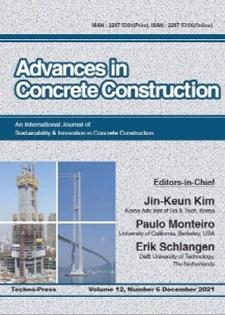
| Advances in Concrete Construction (Advances in Concrete Construction ) |

|
| Advances in Nano Research (Advances in Nano Research) |

|
| Computers and Concrete (Computers and Concrete) |
|
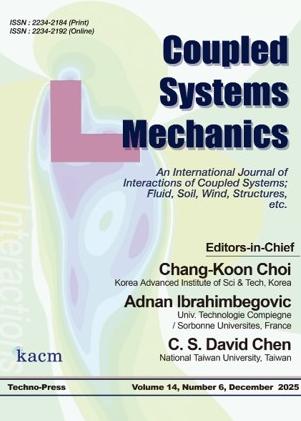
| Coupled Systems Mechanics (Coupled Systems Mechanics) |

|
| Earthquakes and Structures, An International Journal (Earthquakes and Structures) |

|
| Geomechanics and Engineering (Geomechanics and Engineering) |

|
| Journal of Information Processing Systems (JIPS) |

|
| Journal of Internet Computing and Services (KSII - JICS) |

|
| Membrane and Water Treatment (MWT) |

|
| Smart Structures and Systems (Smart Structures and Systems) |

|
| Steel and Composite Structures, An International Journal (Steel and Composite Structures) |
|
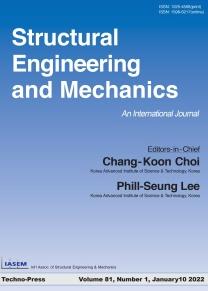
| Structural Engineering and Mechanics, An International Journal (Structural Engineering and Mechanics) |

|
| Wind and Structures, An International Journal (Wind and Structures) |




MANUSCRIPTLINK © 2015 -
