


The 4th International Conference on Machine Learning and Pattern Recognition (MLPR 2026)
MLPR 2026
- URL: https://www.mlpr.org
- Event Date: 2026-12-04 ~ 2026-12-06
- Submission Date: 2026-10-25
- Location: Kyoto, Japan
Engineering & Computer Science (General)
Full Name: The 4th International Conference on Machine Learning and Pattern Recognition (MLPR 2026)
Website: https://www.mlpr.org
Conference Date: December 4-6, 2026
Conference Venue: Kyoto, Japan
The 4th International Conference on Machine Learning and Pattern Recognition (MLPR 2026) will be held at Kyoto, Japan during December 4-6, 2026. MLPR 2026 is sponsored by Ritsumeikan University, Japan. The conference includes keynote talks, invited talks, forums and oral and poster presentations of author papers. We invite submissions of papers on all topics related to machine learning and pattern recognition for the main conference proceedings. All papers will be reviewed in a double-blind process and accepted papers will be presented at the conference. It is our pleasure to welcome you to MLPR 2026.
Committee
Conference Chairs
Yen-Wei Chen, Ritsumeikan University, Japan
Sam Kwong (IEEE Fellow), Lingnan University, Hong Kong, China
Conference Co-chair
Jianhua Zhang, Oslo Metropolitan University, Norway
Program Chairs
Raouf Hamzaoui, De Montfort University, UK
Chi-Man Pun, University of Macau, Macau, China
Edmund Lai, Auckland University of Technology, New Zealand
Hui Yuan, Shandong University, China
Tomoko Tateyama, University of the Ryukyus, Japan
Kezhi Mao, Nanyang Technological University, Singapore
Publication Chair
Yinhao Li, Ritsumeikan University, Japan
Publicity Chairs
T. Akilan, Lakehead University, Canada
Qingjie Meng, University of Birmingham, UK
Yutaro Iwamoto, Osaka Electro-Communication University, Japan
Yan Pang, Shenzhen Institutes of Advanced Technology, Chinese Academy of Sciences, China
Area Chair
Q. M. Jonathan Wu, University of Windsor, Canada
Local Organizing Chair
Jiaqing Liu, Ritsumeikan University, Japan
Keynote Speakers
Prof. Weisi Lin (IEEE/IET Fellow), Nanyang Technological University, Singapore
Prof. Sung-Bae Cho (IEEE/AAIA Fellow, Korean Academy of Science and Technology (KAST ), National Academy of Engineering of Korea (NAEK)), Yonsei University, South Korea
Prof. Cathal Gurrin, Dublin City University, Ireland
Publication
==Conference Proceedings==
Accepted papers of MLPR 2026 will be published in IET Conference Proceedings, which will be included in the IET Digital Library and IEEE Xplore and submitted to EI Compendex and Scopus for indexing.
==Journal Recommendation==
Selected registered paper can be recommended for potential publication in Intelligence & Robotics (ISSN: 2770-3541 (Online)).
Impact Factor:3.9(Q2)| CiteScore: 5.8
Indexing: SCI,Scopus,Google Scholar,CNKI
Note: The original price is $1,800; a 20% discount on the Article Processing Charge (APC) is available for full-paper submissions to the conference.
==Abstract Publication==
Accepted and registered abstracts of MLPR 2026 will be published in Intelligence & Robotics which will be submitted to SCI, Scopus, Google Scholar, CNKI for indexing free of charge.
Refer to the published linkage: https://www.oaepublish.com/articles/2574-1225.2025.154
Topics (Topics of interest for submission include, but are not limited to:)
Track 1: Foundations of Machine Learning
- Statistical learning theory and generalization bounds
- Optimization methods for deep learning (adaptive optimizers, loss landscapes)
- Dimensionality reduction and manifold learning
- Graphical models, causal inference, and probabilistic reasoning
- Active learning and query strategies
- Transfer, multi-task, and meta-learning
- Learning from noisy, limited, or imbalanced data
- Reinforcement learning theory and bandit algorithms
Track 2: Deep Learning & Generative Models
- Generative AI (diffusion models, VAEs, GANs, flow-based models)
- Large language models and vision-language models
- Transformer architectures and attention variants
- Self-supervised and foundation model pre-training
- Model compression (pruning, quantization, knowledge distillation)
- Neural architecture search and automated deep learning
- Graph neural networks and geometric deep learning
- Representation learning for video, 3D, and multimodal data
Track 3: Pattern Recognition & Computer Vision
- Feature extraction, selection, and descriptor learning
- Object detection, segmentation, and tracking
- Face, gesture, and action recognition
- Medical image analysis and computational pathology
- Remote sensing image analysis and Earth observation
- Document analysis and handwriting recognition
- Biometric recognition (fingerprint, iris, voice)
- 3D shape analysis and point cloud processing
Track 4: Responsible & Trustworthy AI
- Fairness, accountability, and transparency in ML models
- Explainable AI (XAI) and interpretability methods
- Robustness against adversarial attacks and out-of-distribution inputs
- Privacy-preserving ML (federated learning, differential privacy)
- AI safety, value alignment, and ethical frameworks
- Uncertainty quantification and reliable predictions
- Bias detection and mitigation in datasets and algorithms
- Regulatory compliance and auditable AI systems
Track 5: Applications of ML & Pattern Recognition
- ML for healthcare (diagnosis, drug discovery, genomics)
- Intelligent transportation and autonomous driving
- Natural language processing and speech recognition
- Recommender systems and personalization
- Time-series forecasting (finance, energy, IoT)
- Robotics and embodied AI
- Smart manufacturing and predictive maintenance
- Agriculture, environmental monitoring, and climate science
Track 6: Reinforcement Learning & Decision Intelligence
- Deep reinforcement learning algorithms (DQN, PPO, SAC, TD3)
- Multi-agent reinforcement learning and game-theoretic reasoning
- Inverse reinforcement learning and imitation learning
- Hierarchical reinforcement learning and option frameworks
- Offline reinforcement learning and batch RL
- Reinforcement learning from human feedback (RLHF)
- Sequential decision making under uncertainty (POMDPs, bandits)
- Applications of RL in robotics, autonomous driving, recommendation systems, and game AI
More Details please click: https://www.mlpr.org/cfp.html
Paper Requirement:
Papers should be prepared in English and carefully checked for correct grammar. Figures should be of high quality. Your submitted work must be original in the sense that it has never been published nor submitted for publication consideration anywhere. To ensure high scientific quality, all papers will be double-blind reviewed by the Technical Committee Members.
- Submission Types
* Both abstract and full paper submission can be presented and published. Full Paper should be no less than 5 full pages. If the paper length exceeds 6 printed pages, including all figures, tables, and references, extra page will be charged 60 USD per page.
- Submission Process
1) Download the Template for formatting your submission.
- Abstract Template: https://www.mlpr.org/files/template-abstract.docx
- Full Paper Template: https://www.mlpr.org/files/template.docx
2) Submit your paper to Online Submission System: http://confsys.iconf.org/submission/mlpr2026 or mlpr_Conf@outlook.com
More Details please click: https://www.mlpr.org/sub.html
Conference Program
Friday - December 4, 2026
10:00 - 17:00 Sign In and Conference Material Collection
16:00 - 18:00 Committee Conference
Saturday - December 5, 2026
9:00 - 12:00 Opening Ceremony and Keynote Speeches
12:00 - 13:30 Lunch
13:30 - 15:30 Invited Speeches and Parallel Oral Sessions
15:30 - 16:30 Poster Sessions
16:30 - 18:30 Invited Speeches and Parallel Oral Sessions
18:30 - 20:30 Dinner Banquet and Award Ceremony
Sunday - December 6, 2026
9:00 - 12:00 Invited Speeches and Parallel Oral Sessions
12:00 - 13:30 Lunch
13:30 - 19:00 City Tour
Contact us
Conference secretary: Miss Tessa Chen
Tel: +86-13103333373
Email: mlpr_Conf@outlook.com
Office Hour: 9:30--18:00, Monday to Friday

Journal Promotion

|
| Acta Koreana (Acta Koreana) |

|
| Acta Via Serica (AVS) |

|
| Advances in Concrete Construction (Advances in Concrete Construction ) |

|
| Advances in Nano Research (Advances in Nano Research) |

|
| Computers and Concrete (Computers and Concrete) |

|
| Coupled Systems Mechanics (Coupled Systems Mechanics) |

|
| Earthquakes and Structures, An International Journal (Earthquakes and Structures) |

|
| Geomechanics and Engineering (Geomechanics and Engineering) |
|
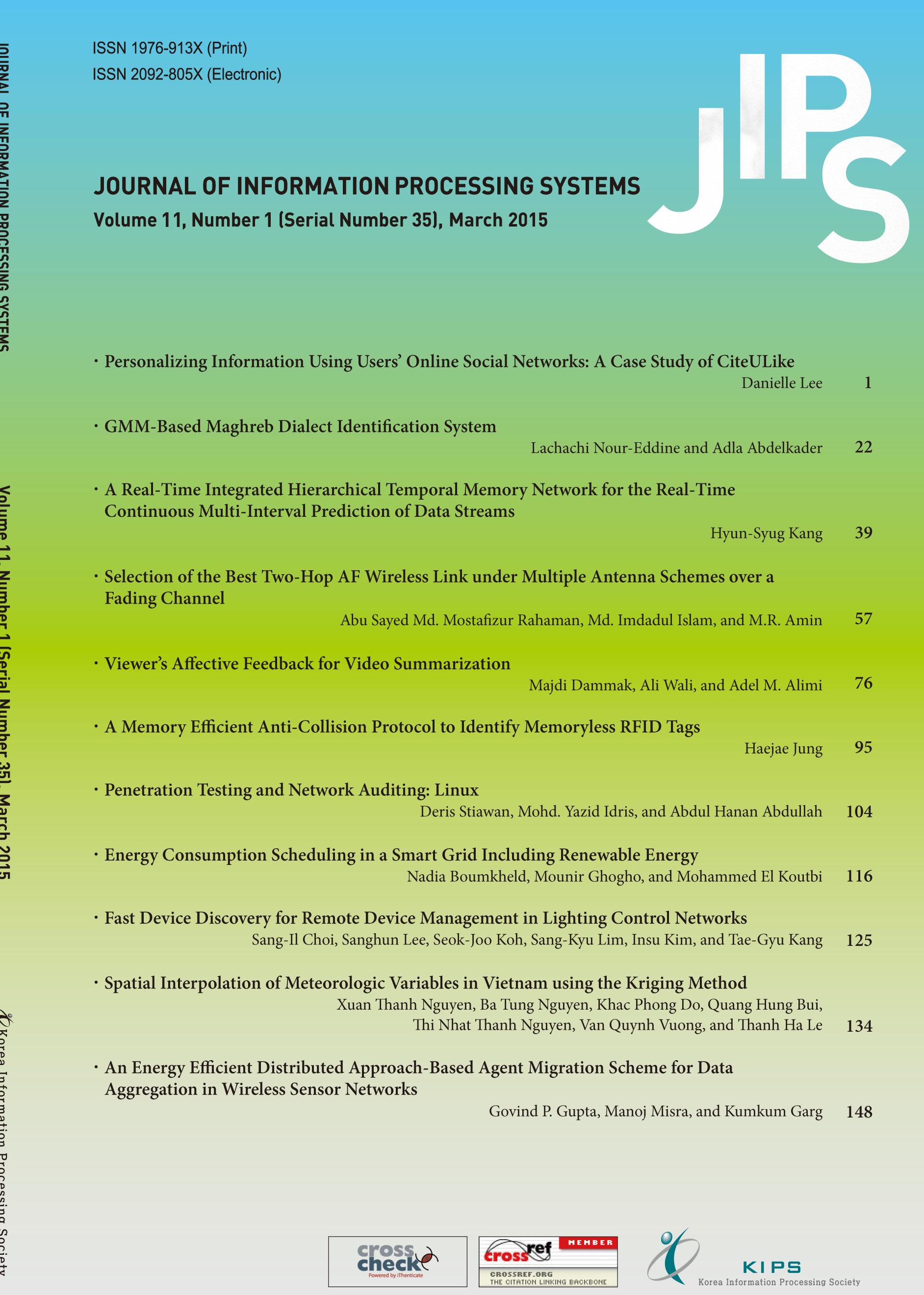
| Journal of Information Processing Systems (JIPS) |

|
| Journal of Internet Computing and Services (KSII - JICS) |

|
| Membrane and Water Treatment (MWT) |

|
| Smart Structures and Systems (Smart Structures and Systems) |

|
| Steel and Composite Structures, An International Journal (Steel and Composite Structures) |

|
| Structural Engineering and Mechanics, An International Journal (Structural Engineering and Mechanics) |

|
| Wind and Structures, An International Journal (Wind and Structures) |




MANUSCRIPTLINK © 2015 -
