


5th MANILA International Conference on Chemical, Biological & Environmental Engineering (MCBEE-26) scheduled on March 30-April 1, 2026 Manila (Philippines)
MCBEE-26
- URL: https://cbmsr.org/conference/379
- Event Date: 2026-03-30 ~ 2026-04-01
- Submission Date: 2026-02-27
- Organizer: CBMSR
- Location: Manila, Philippines
Chemical & Material Sciences (General) Chemical Kinetics & Catalysis Bioinformatics & Computational Biology Molecular Biology
Topics/Call for Papers
Full Articles/ Reviews/ Shorts Papers/ Abstracts are welcomed in the following research fields:
1. 🧪 Chemical Engineering Fundamentals and Process Design
This covers the core principles of transformation and scale-up, with a focus on efficiency and safety.
Reaction Engineering & Catalysis:
Novel catalyst development (e.g., nanocatalysts, biocatalysts, electrocatalysts).
Reaction Kinetics and advanced reactor design (e.g., microreactors, fluidized beds).
Catalysis for sustainable energy (e.g., $\text{CO}_2$ conversion, hydrogen production).
Separation Processes & Transport Phenomena:
Advanced membrane science and technology (e.g., polymer membranes, functionalized membranes).
Multiphase flow, fluid dynamics, heat transfer, and mass transfer in complex systems.
Filtration, adsorption, distillation, and crystallization.
Process Design, Control, and Intensification:
Modular and intensified chemical processes (Process Intensification).
Computational Methods: Modeling, simulation, and Digital Twins for process optimization and safety.
Process safety management and risk assessment.
2. 🧬 Biological and Biochemical Engineering
This theme focuses on utilizing and engineering biological systems for industrial, medical, and sustainable applications.
Synthetic Biology & Metabolic Engineering:
Designing and engineering biological systems (microbes, cells) for novel functions.
Metabolic Pathway Engineering for biosynthesis of chemicals, fuels, and pharmaceuticals.
Genome-engineering (e.g., CRISPR technologies) for therapeutics and sustainable production.
Bioprocess and Food Engineering:
Bioreactor Design and Optimization for microbial and cell cultures (fermentation).
Bioprocessing for food ingredients, supplements, and novel food technologies (e.g., cultivated meat).
Bioseparations and downstream processing (e.g., protein purification, vaccine production).
Biomaterials and Tissue Engineering:
Design and fabrication of biomaterials for drug delivery, tissue engineering, and regenerative medicine.
Biosensing, microphysiological systems (Organ-on-a-chip), and medical diagnostics.
3. ♻️ Environmental Engineering and Sustainability
This section addresses environmental protection, resource management, and pollution control, integrating chemical and biological tools.
Water Resources and Treatment:
Advanced water purification technologies (e.g., membrane bioreactors, reverse osmosis).
Removal of Emerging Contaminants (e.g., pharmaceuticals, microplastics, PFAS) from water sources.
Resource recovery from wastewater (e.g., nutrients, energy).
Climate Change Mitigation and Energy:
Carbon Capture, Utilization, and Storage (CCUS) technologies.
Development of Biofuels and Bioenergy (e.g., sustainable biorefining of fuels from biomass and algae).
Sustainable process design, Green Chemistry, and the use of renewable energy in chemical production.
Waste Management and Circular Economy:
Solid Waste Valorization: Converting waste (industrial, agricultural, plastic) into valuable products or energy (Waste-to-Energy).
Bioremediation and physicochemical remediation of contaminated soil, air, and water.
Implementing Circular Economy Principles for material recycling and resource recovery.
Event Promotion

|
|
The 13th International Conference on Quantum Dots (QD 2026) |
| 2026-05-17 ~ 2026-05-22 |
|
|
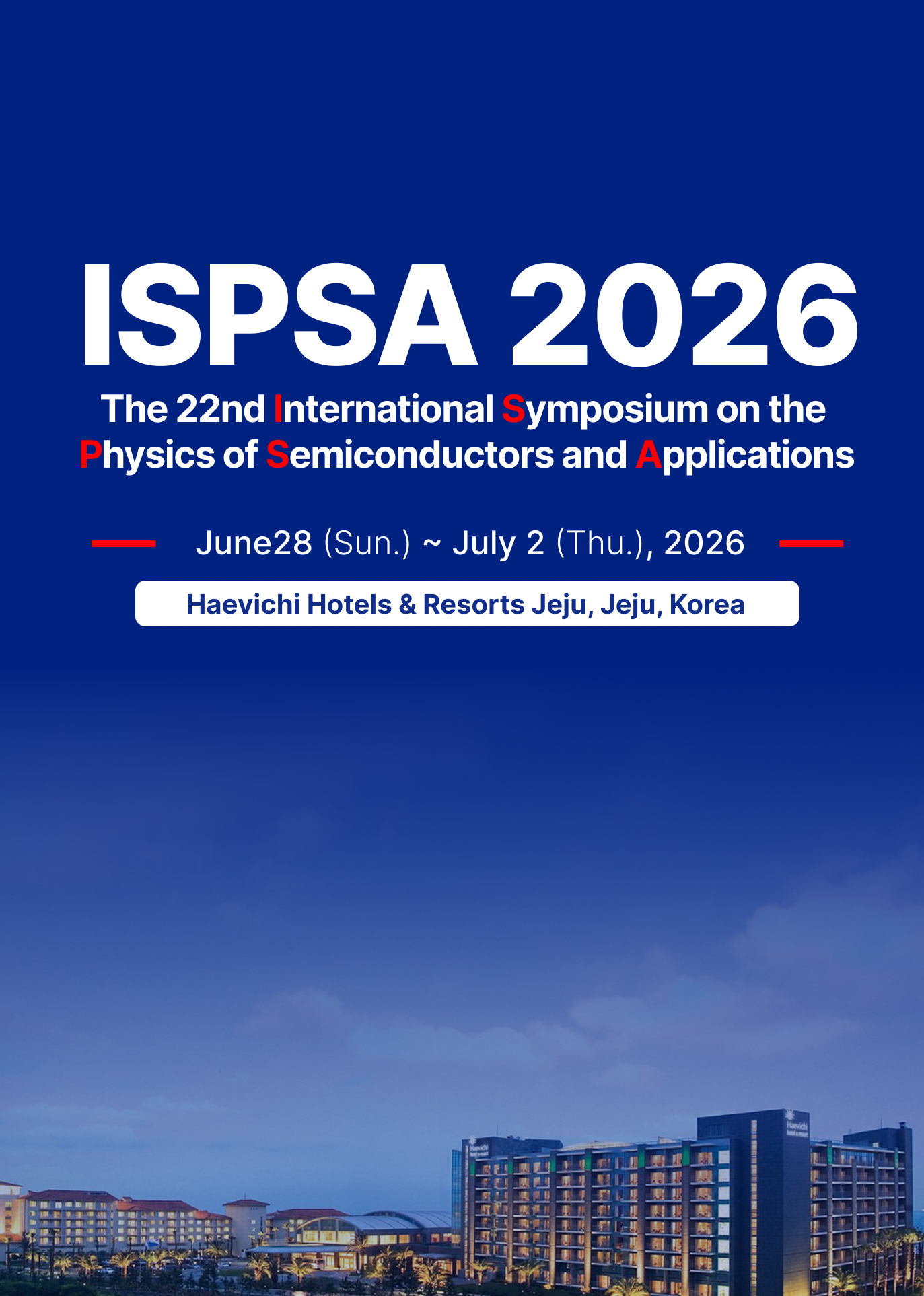
The 22nd International Symposium on the Physics of Semiconductors and Applications (ISPSA 2026) |
| 2026-06-28 ~ 2026-07-02 |

|
|
The 15th Asia-Pacific Conference on Transportation and the Environment (APTE 2026) |
| 2026-07-08 ~ 2026-07-10 |








MANUSCRIPTLINK © 2015 -
