


Artificiality | Surfaciality - An international conference on AI
- URL: https://french.rutgers.edu/
- Event Date: 2026-04-09 ~ 2026-04-10
- Abstract Submission Date: 2026-01-20
- Submission Date: 2026-01-20
- Organizer: Rutgers University and Aix-Marseille Université
- Location: Marseille, France
Artificial Intelligence Film French Studies Humanities, Literature & Arts (General) Language & Linguistics Literature & Writing Visual Arts
“En constatant, en notant la forme de leur flèche, le déplacement de leurs lignes, l'ensoleillement de leur surface,
je sentais que je n'allais pas au bout de mon impression, que quelque chose
était derrière ce mouvement, derrière cette clarté, quelque chose qu'ils semblaient contenir et dérober à la fois.”
Marcel Proust, Du côté de chez Swann, 1913
When recalling the steeples from his childhood years, the narrator of In Search of Lost Time notes how the impressions made by an object’s appearance so often eclipse its essence. Its visible form dazzles the observer and obscures what lies at its core. Just as Proust’s masterwork propels subjectivity into the realm of the modern world, awash with perceptions increasingly detached from stable truths, so does the launch of the computational age. From the 20th century onwards, computational sciences and automatic models have risen at an asymptotic pace. Artificially generated images, sounds, and all kinds of sensory stimuli increasingly permeate everyday life, further blurring the boundaries between representation and reality. This conference thus invites scholars to reflect on how modes of representing and conceptualizing reality are evolving today, while attending to the longstanding theoretical scrutiny of the artificial and the superficial.
We draw attention to the significance of the surface––the perceptible plane of representation––and to how it has become a hotbed of representations surpassing whatever hopes Aristotle had in mind when defining mimesis in his Poetics. AI models are a highly topical case-in-point: to the collective mind, their intricate computational architectures are often overshadowed by their spectacular outputs, which are intelligible, visible, and tangible, and thus far easier to comprehend than the underlying mechanisms that generate them. Much like the android agent Ash becoming an antagonist in Ridley Scott’s 1979 Alien, contemporary works across literature, cinema, and the visual arts highlight the superficial dimension of automated models by depicting machines whose alluring appearances fascinate and deceive. In such narratives, the interiority of the machine appears fictitious, a vision created by the users and projected onto the model, thereby challenging the canonical dichotomy between essence and appearance.
This imbalanced equilibrium favoring the surface within representational modes can be referred to by the coinage “surfaciality,” which foregrounds the surface while also keeping the negative connotations of superficiality at bay, though never entirely dispelling them. Surfaciality is at stake across a wide range of domains beyond aesthetics. Various semiotic systems, for instance, illuminate the prominence of surface in representation: Jakobson’s signifier-signified distinction or Chomsky’s deep- and surface-structures testify to an understanding of language itself relying on surface form and underlying substrata. Such models implicitly apply a computational framework to language, conceptualizing linguistic knowledge as input constantly processed to generate output. Scientific practice, too, highlights the predominance of surface over depth. Western medicine is often criticized for privileging symptom management and training physicians to act as mechanics, resulting in missed or drawn-out diagnoses shaped by social bias. Surfaciality can thus be a vector for structural inequities, as critical race studies also remind us: for Fanon, skin becomes the primary site of racialization, thus leading to the “epidermalization of inferiority”.
Interpretations of “Artificiality | Surfaciality” may thus explore (but are in no way restricted to):
- Speculative approaches to AI and artificial surfaces in literature, philosophy, media theory
- AI media and representations, deep-fake technologies
- Surfaces of memory (archive, palimpsest, databases, digital remains…)
- Authorship, authenticity and the artificial, intellectual property, and legal regimes of AI
- Posthumanism, cyborgs, avatars, synthetic bodies
- Anthropomorphism and metamorphosis
- Hallucinations, the unexpected
- Affects and emotions in AI-generated expressions
- Surface reading, close reading, computational reading in literary and cultural analysis
- Theories of essence, appearance, epistemology, and phenomenology
- Linguistics, language as surface/depth, translation, gloss, and commentary
- Aesthetics of artificiality, glamour, queer excess, and camp
- Spectacle, illusion, ornamentalism, and performance
- Opacity, systems of surveillance and sousveillance
- Surfaciality within neoliberal multiculturalism and racial capitalism
- Early modern conceptions of artifice, imitation, and the “natural” versus the “crafted”
- Ecology of surfaces (interfaces, environment, artificiality of the “natural”)
- Artificial life, ecological simulation, digital materialities
This conference is thus an invitation to investigate the representational divide between surface and depth and the ways in which the superficial level of representation tends to outweigh the unseen implications lying under the surface. It will take place over one and a half days, with two half-days held simultaneously between Rutgers University (NJ, USA) and Aix-Marseille Université (France), on April 9–10, 2026.
Participants from the academic, artistic, and professional fields related to artificial intelligence will be taking part in this event, and we welcome submissions from doctoral students or early-career academics of all disciplinary perspectives for 15-minute presentations. Proposals, to be sent to amd508@rutgers.edu by January 20, 2026, should include a 250-word abstract with a working title, a 100-word bio, and a short bibliography.
Event Promotion

|
|
The 13th International Conference on Quantum Dots (QD 2026) |
| 2026-05-17 ~ 2026-05-22 |
|
|
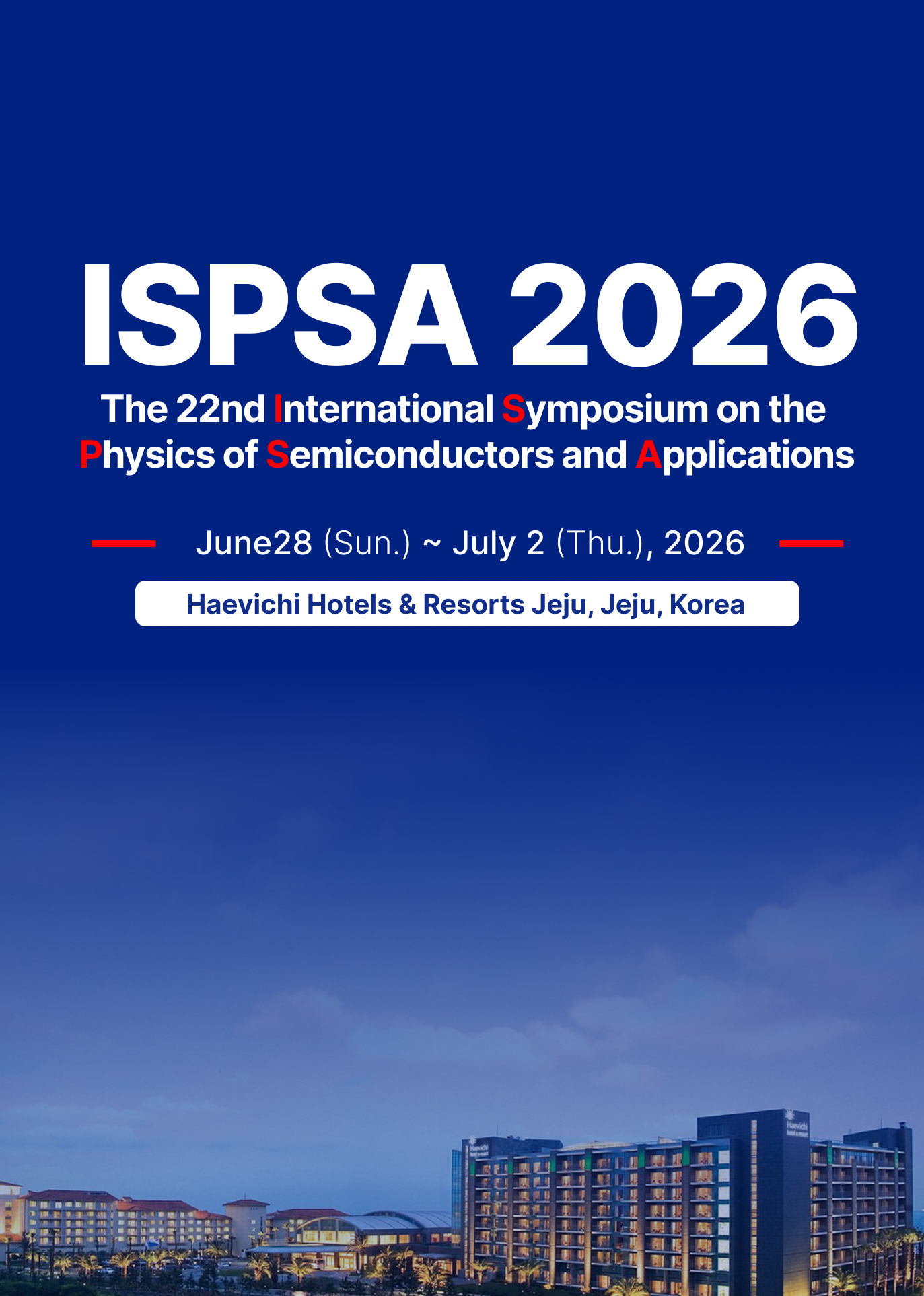
The 22nd International Symposium on the Physics of Semiconductors and Applications (ISPSA 2026) |
| 2026-06-28 ~ 2026-07-02 |

|
|
The 15th Asia-Pacific Conference on Transportation and the Environment (APTE 2026) |
| 2026-07-08 ~ 2026-07-10 |
Journal Promotion
|
| Acta Koreana (Acta Koreana) |
|
| Acta Via Serica (AVS) |

|
| Earthquakes and Structures, An International Journal (Earthquakes and Structures) |
|
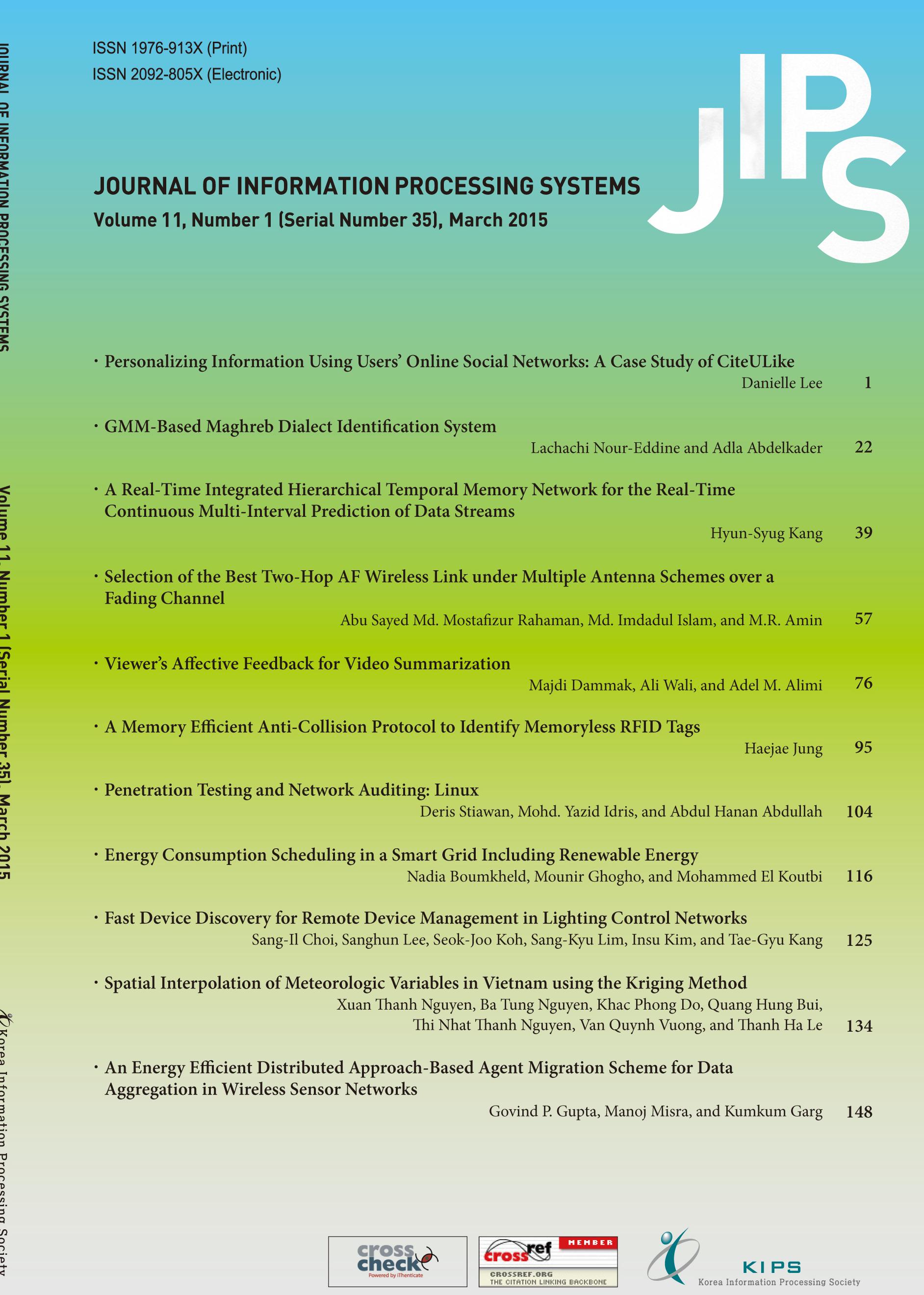
| Journal of Information Processing Systems (JIPS) |

|
| Journal of Internet Computing and Services (KSII - JICS) |

|
| Membrane and Water Treatment (MWT) |

|
| Smart Structures and Systems (Smart Structures and Systems) |



MANUSCRIPTLINK © 2015 -
