

Rotura – Journal of Communication, Culture, and Arts
Rotura
- URL: https://publicacoes.ciac.pt/index.php/rotura/chamadas-de-trabalhos
- Call For Paper Type: Regular
- H2 Index: 0
- Submission Date: 2026-09-30
- Notification Date: 2026-11-15
- Final Version Date: 2026-12-31
Humanities, Literature & Arts (General) Music & Musicology Communication Culture
Reconfiguring Musical Performance in the Age of New Media
This issue aims to examine the impact of new media art practices on musical performance among classically trained instrumentalists. It seeks to explore how these practices are reshaping performers’ roles and identities, shifting them from interpreters to hybrid creators engaged with interactivity, algorithms, and generative systems. Rather than solely reflecting on past developments, the issue foregrounds how performance operates within paradigms of co-agency in multimedia creation, where it is understood as a distributed process that reconfigures authorship and modes of agency.
In this context, co-agency refers to the dynamic and distributed interaction between human performers and technological systems, in which agency emerges relationally rather than residing exclusively in the performer.
Performance, particularly in the context of classically trained instrumentalists, is a complex physical and cognitive activity that integrates sound intention (musical intentions conveyed through the emphasis on structures, phrasing, and dynamics), rhythm (the temporal organisation of sound) and articulation (the shaping of sound through attack, duration, and release) (Laukka, 2004; Palmer, 1997). In the process of interpreting a score for an audience (Travasso & Gomes, 2021), this interplay between the physical and the cognitive operates in two complementary ways: (1) consciously planned and executed physical movements; and (2) movements emerging from embodied, often unconscious, practice routines (Nijs et al., 2013).
The score plays a central mediating role between composers and performers, generating interpretative possibilities and new artistic forms (Doyle & Toniutti, 2023; LaBelle, 2006). As argued by Cook (2014), the performance of written Western classical music reflects the interpretative choices of performers, shaped by both their creativity and their knowledge of musical culture. In this sense, instrumental performance can be understood as comprising two interrelated dimensions: the acquisition of technical skills enabling musical interpretation, and the application of cultural and stylistic knowledge to structure and shape that interpretation. Together, these dimensions give rise to the performative realisation of the score.
Another defining characteristic of musical performance is its intricate relationship with technology. The continuous evolution of musical instruments, alongside shifting performative demands, has long required instrumentalists to adapt and expand their practice (Magnusson, 2019). Within the broader context of the digital and information revolution, contemporary performers are confronted with new technical, technological, and aesthetic challenges (Castilho et al., 2021; Ferguson & Brown, 2016). This evolving landscape places increasing pressure on performers to acquire new competencies and to redefine their role. Today’s instrumentalists operate within a complex environment in which traditional musical skills are intertwined with technological proficiency and experimental artistic practices, giving rise to what may be described as the “post-performer”.
This expanded role encompasses not only interpretation but also sound design, composition, and real-time interaction with digital systems. As such, contemporary instrumentalists are required to adopt a multifaceted approach, in which technology extends the physicality of the body and reconfigures the boundaries of musical practice and artistic expression.
In summary, these perspectives highlight the profound and multifaceted impact of technology on musical performance, offering critical insights into the evolving identities and practices of contemporary musicians within new media art contexts.
TOPICS OF INTEREST
We welcome submissions including, but not limited to, the following topics:
- Post-performer paradigms and hybrid artistic identities
- Co-agency, distributed authorship, and human–machine interaction in performance
- New media art practices in instrumental music performance
- Instrumental performance and generative / algorithmic systems
- Real-time interaction, live electronics, and augmented instruments
- Embodiment, gesture, and extended instrumental techniques in technological contexts
- The role of the score in technologically mediated performance
- Sound design and composition within instrumental practice
- Performance as a site of research in artistic and practice-based methodologies
- Post-digital aesthetics and experimental performance practices
- Artificial intelligence and machine learning in musical performance
- Expanded listening and new modes of audience engagement
Deadline for paper submission: September 30, 2026
Notification of acceptance: November 15, 2026
Final version submission: December 31, 2026
Publication: February 28, 2027
References
Castilho, L., Dias, R., & Pinho, J. (2021). Perspectives on Music, Sound and Musicology: Research, Education and Practice. Springer. https://doi.org/https://doi.org/10.1007/978-3-030-78451-5
Cook, N. (2014). Between art and science: Music as performance. J. Br. Acad., 2(March), 1–25. https://doi.org/10.5871/jba/002.001
Doyle, K., & Toniutti, A. (2023). Problem as Possibility: A Dialogue about Performance and Analysis with Lucia Dlugoszewski’s Experimental Notation as Case Study. In Contemporary Music Review (Vol. 42, Issue 1, pp. 100–113). https://doi.org/10.1080/07494467.2023.2193090
Ferguson, J. R., & Brown, A. R. (2016). Fostering a Post-Digital Avant-Garde: Research-led teaching of music technology. Organised Sound, 21(2), 127–137. https://doi.org/10.1017/S1355771816000054
LaBelle, B. (2006). Background Noise: Perspectives On Sound Art. Continuum.
Laukka, P. (2004). Instrumental music teachers’ views on expressivity: a report from music conservatoires. Music Education Research, 6(1), 45–56. https://doi.org/10.1080/1461380032000182821
Magnusson, T. (2019). Sonic Writing, technologies of material, symbolic & signal inscriptions. In Boomsbury Acad. https://doi.org/10.5040/9781501313899
Nijs, L., Lesaffre, M., & Leman, M. (2013). The musical instrument as a natural extension of the musician. In M. Castellengo, H. Genevois, & J.-M. Bardez (Eds.), Music and its instruments (pp. 467–484). Editions Delatour France.
Palmer, C. (1997). Music Performance. Annual Review of Psychology, 48(1), 115–138. https://doi.org/https://doi.org/10.1146/annurev.psych.48.1.115
Travasso, R., & Gomes, J. A. (2021). Evolving Instrumentalist - a continuous trajectory. In I. Guerrero & D. Galindo (Eds.), I Congreso Internacional “Intersección: arte, sociedad y tecnología en la innovación musical" (pp. 186–191). Procompal Publicaciones.
Event Promotion
Journal Promotion
|
| Acta Koreana (Acta Koreana) |
|
| Acta Via Serica (AVS) |
|
| Advances in Concrete Construction (Advances in Concrete Construction ) |

|
| Advances in Nano Research (Advances in Nano Research) |
|
| Computers and Concrete (Computers and Concrete) |
|
| Coupled Systems Mechanics (Coupled Systems Mechanics) |
|
| Earthquakes and Structures, An International Journal (Earthquakes and Structures) |
|
| Geomechanics and Engineering (Geomechanics and Engineering) |
|
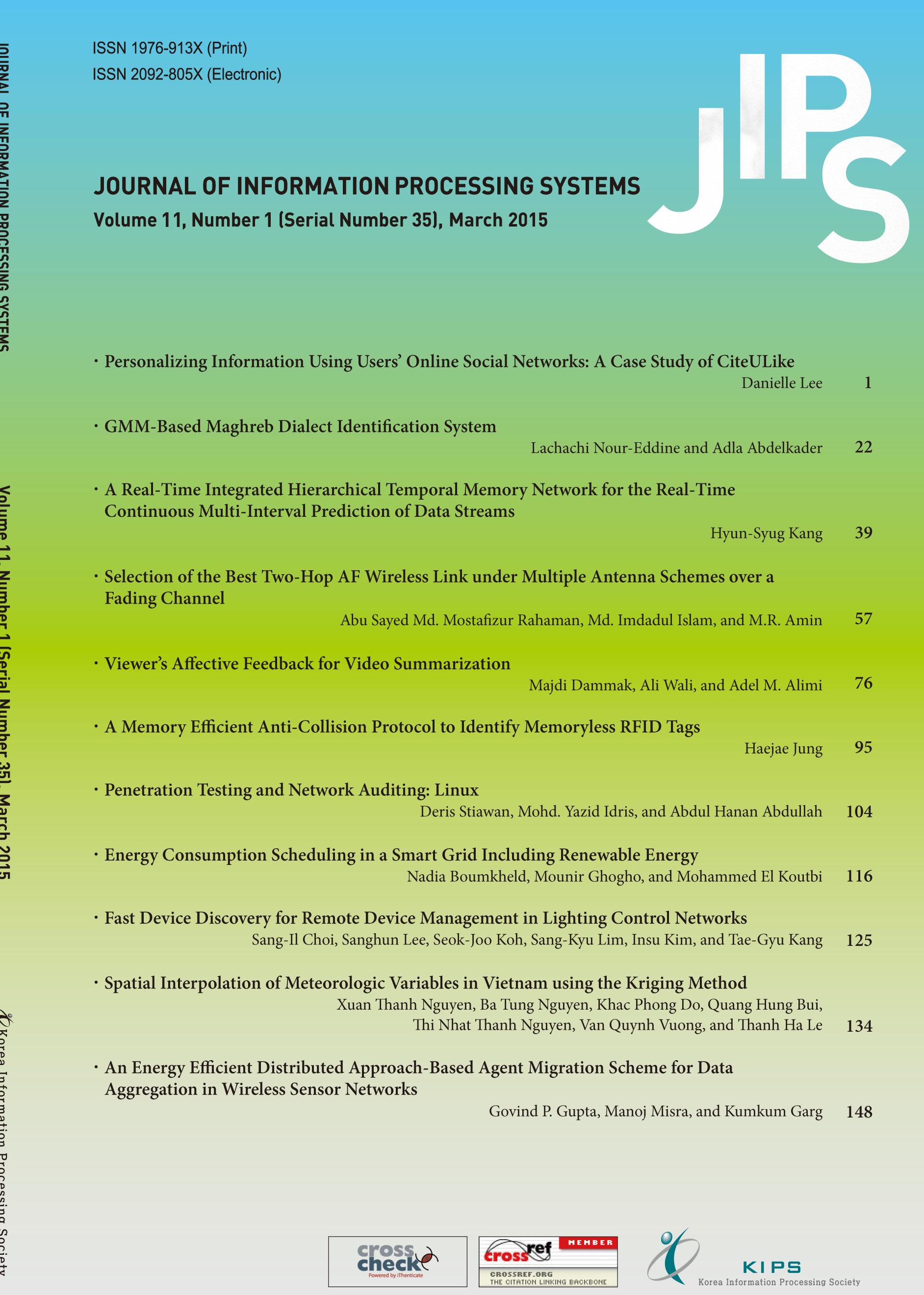
| Journal of Information Processing Systems (JIPS) |

|
| Journal of Internet Computing and Services (KSII - JICS) |

|
| Membrane and Water Treatment (MWT) |
|
| Smart Structures and Systems (Smart Structures and Systems) |
|
| Steel and Composite Structures, An International Journal (Steel and Composite Structures) |
|
| Structural Engineering and Mechanics, An International Journal (Structural Engineering and Mechanics) |
|
| Wind and Structures, An International Journal (Wind and Structures) |




MANUSCRIPTLINK © 2015 -
